
Every classroom has learners who need more time and good teaching finds a way to support them without leaving the rest of the class behind. The secret is not slowing down. It is building in more entry points.
Introduction
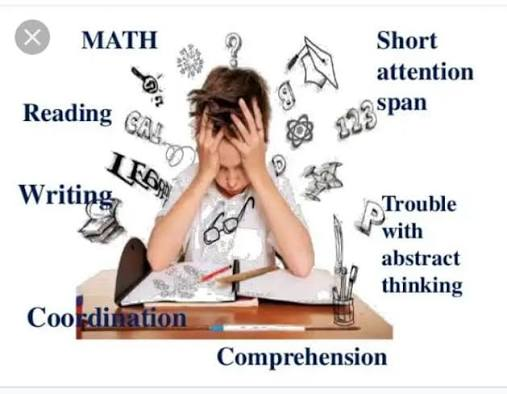
There is one in almost every class. The student who is still on question two when the rest of the room has finished all five. The one who writes slowly, reads haltingly, or needs an explanation given three different ways before it clicks. The one who raises their hand only when everyone else has put theirs down and sometimes not even then.
Every teacher feels the tension. If you slow the whole class down to support one student, you risk disengaging the majority. If you keep the pace and leave that student behind, you have tacitly decided that not every child in your care deserves to reach the goal. Neither option is acceptable and neither is necessary. There is a third way.
Supporting slow learners does not mean teaching two separate lessons or abandoning your curriculum plan. It means building enough flexibility into one lesson that students with different processing speeds can all access the same content, at different depths, through different routes, with different levels of support. This is not a radical pedagogy. It is thoughtful lesson design, applied consistently, with every learner in view.
The five strategies below are practical, low-resource, and tested in Nigerian classrooms where class sizes are large and teacher aides are rare. They work with what you already have.
A slow learner is not a poor learner. They are a learner whose pace does not match the system and the system can bend further than we think. – Adapted from learning diversity research
| Why students fall behind Many causes processing speed, foundational gaps, language barriers, home factors rarely intelligence | Peer learning effect Strong students explain concepts to peers in ways teachers often cannot and both learn more | Small wins and motivation Critical consistent positive feedback on progress however small, prevents disengagement |
Why students fall behind: understanding before responding
| Cause | What it looks like and what it is not |
| Processing speed | The student understands the material, they simply need more time to organize their response. Often mistaken for low intelligence. These students frequently produce strong work when given adequate time. |
| Foundational gaps | Content from earlier years was not mastered, and today’s lesson depends on it. The student is not slow, they are missing a step the lesson assumes they already have. |
| Language barriers | In multilingual Nigerian classrooms, some students are processing in a second or third language simultaneously. The cognitive load is higher, not the ability level. |
| Home and life factors | Hunger, instability, responsibilities at home, or emotional distress all affect cognitive availability. A student may be perfectly capable on a good day and significantly slower on a hard one. |
| Unidentified learning needs | Dyslexia, dyscalculia, and other learning differences are significantly underdiagnosed in Nigerian schools. Many students labelled as slow are processing differently, not less effectively. |
Common responses vs what actually helps
| Responses that do not help | Responses that work |
| Repeating the same explanation louder or faster | Re-explaining using a different format like diagram, example, demonstration |
| Publicly identifying the student as struggling | Checking in quietly, privately, without drawing attention |
| Moving on and hoping they will catch up | Building in structured support before they fall too far behind |
| Giving them easier work that never connects to the main lesson | Offering tiered tasks that connect to the same goal at different depths |
| Attributing the difficulty to laziness or poor attitude | Staying curious about the cause before assuming the worst |
Five strategies that support slow learners without slowing the class
1. Tiered tasks: same goal, different depth
A tiered task gives all students the same learning objective but adjusts the complexity of how they reach it. The core question remains the same; all students are working toward the same understanding, but the scaffolding varies. For a lesson on fractions, all students solve fraction problems, but struggling learners work with visual aids and simpler denominators while stronger learners work with more complex operations or word problems. In a history lesson, all students answer the same question about causes of a conflict, but one version provides a structured framework with sentence starters while another requires students to build their own argument from scratch. Crucially, tiered tasks do not label students or separate them into visible “slow” and “fast” groups. If distributed privately or designed to look similar, students work at the level that serves them without the social cost of being identified as behind.
Try it: For your next written task, prepare a version with sentence starters and a version without. Distribute based on your observation, without announcing which is which.
2. Peer learning: harness the power already in the room
One of the most underused resources in any Nigerian classroom is the students themselves. Research consistently shows that students often explain concepts to each other in ways that land more effectively than a teacher’s explanation, because they are closer in language, experience, and cognitive proximity to the struggle. A well-structured peer learning system places a student who has grasped a concept alongside one who has not, with a clear, structured task for both: the stronger student explains, the weaker student asks questions and demonstrates understanding. Both learn more deeply in this exchange. The key is to frame it as a teaching role not a babysitting one, so that the stronger student experiences it as an honour rather than a burden. Rotate the roles regularly, because the student who needs support today may be the one explaining confidently next week.
Try it: After your next direct instruction segment, pair students deliberately, one who grasped the concept quickly with one who seems uncertain and give them a 5-minute structured discussion task.
3. Strategic circulation: be where the struggle is

During independent or paired work, most teachers circulate generally, moving around the room, glancing at work, answering raised hands. Strategic circulation means moving with intention: you already know, from observation over previous lessons, which students are most likely to need support. You go to them first, before they raise their hand, before they give up, before the gap between them and the rest of the class widens further. A quiet word, a pointed question, a brief re-explanation given standing beside them rather than across the room, these micro-interventions cost 60 seconds each and can make the difference between a student who catches up and one who quietly disengages. The earlier you reach a struggling student in any given lesson, the less ground they have to recover by the end of it.
Try it: Before your next lesson, identify the two or three students most likely to struggle with the day’s content. Go to them first during the activity phase.
4. Simplified instructions: clarity is support
Many slow learners are not struggling with the content, they are struggling with the instructions. A task brief with multiple steps, complex language, or unclear sequencing creates a processing burden that prevents students from even beginning. Simplified instructions do not mean simplified content. They mean breaking the task into numbered steps, using plain language, and providing a visual or written anchor students can refer back to while they work. In a Nigerian classroom where instructions are often given verbally and once only, writing the task steps on the board in clear, sequential language, is one of the simplest and highest-impact adjustments a teacher can make. It costs nothing, takes two minutes, and reduces the number of students who are stuck not because they cannot do the task, but because they are not sure what the task is.
Try it: For your next task, write the instructions on the board in three numbered steps before you explain them verbally. Leave them visible throughout the activity.
5. Celebrate progress, not just performance
Slow learners are often the students who receive the least positive feedback in a classroom, because most teacher praise goes to students who produce the fastest or most impressive work. But motivation research is clear: the students who most need encouragement are often the ones who receive the least. Noticing and naming progress, however incremental is one of the most powerful tools a teacher has for keeping a struggling learner engaged. “Kolade, your paragraph this week is much clearer than last week, I can see you are working on your structure” is far more motivating than silence, and far more accurate than a general “good job.” It also communicates something essential: that the teacher has been paying attention, that the student’s effort has been seen, and that growth not just achievement, is valued in this classroom.
Try it: This week, identify one slow learner and give them one specific, genuine piece of progress-based feedback, not “good” but “I noticed that you did X differently this time.”
A four-week support rhythm for slow learners
| Week | Teacher action | Focus |
| Week 1 | Identify the two or three students most consistently behind. Note which parts of lessons they struggle with most; is it reading, oral response, written tasks, or speed. | Observe |
| Week 2 | Introduce tiered tasks and strategic circulation. Go to identified students first during independent work. Give one specific piece of progress feedback to each per lesson. | Support |
| Week 3 | Set up peer learning pairs. Brief the stronger student on their role. Monitor the pair during structured activities and adjust pairings if needed. | Peer |
| Week 4 | Review progress. Have the student completed more work? Are they engaging more? Is the gap narrowing? Adjust your approach based on what you observe, not what you assumed at the start. | Review |
From a classroom in Kano

A JS2 English teacher in Kano had a class of 48 students. One boy, Musa, consistently failed to complete written tasks within the time given, not because he could not write, but because he spent the first ten minutes of every writing activity staring at the page, unable to begin. The teacher initially assumed he was unmotivated. Then she noticed something: Musa spoke confidently and fluently during oral activities. He was not struggling with English, he was struggling with the transition from thought to written word.
She introduced two changes specifically for him, without announcing them to the class. She began writing one sentence starter on his page before the writing task began, just the first five words of the first sentence. She also started pairing him with a classmate for a two-minute discussion of what they were going to write before they wrote it.
Within three weeks, Musa was completing his written tasks within the time given. Within six weeks, he had submitted the highest-scoring short story in the class. She had not slowed the class down. She had found the one small thing that was blocking him and removed it.
Your action step this week
Identify one student in your class who consistently falls behind, and spend this week observing rather than assuming. Watch which specific moments in your lessons are hardest for them, is it reading the task? Starting to write? Following a multi-step instruction? Working independently without a prompt? Once you have named the specific barrier, you can address it directly. Supporting a slow learner is rarely about teaching more. It is about removing the one thing that is in the way and you cannot find that thing without first watching closely enough to see it.