
The world your students will enter is not the same one that designed the traditional lecture. Here is how to close that gap, without starting from scratch.
Introduction
Picture this: it is 9 a.m. You have prepared a detailed, well-organised lecture. You walk into the hall, begin to speak and within fifteen minutes, half the room is staring at the ceiling, checking phones, or nodding off.
This is not a discipline problem. It is a design problem. The traditional lecture, built around one expert speaking to a passive audience, was designed for a world with very different learners, very different goals, and very different tools. Today’s students are trained by the internet to expect interaction, relevance, and feedback, often all at once.
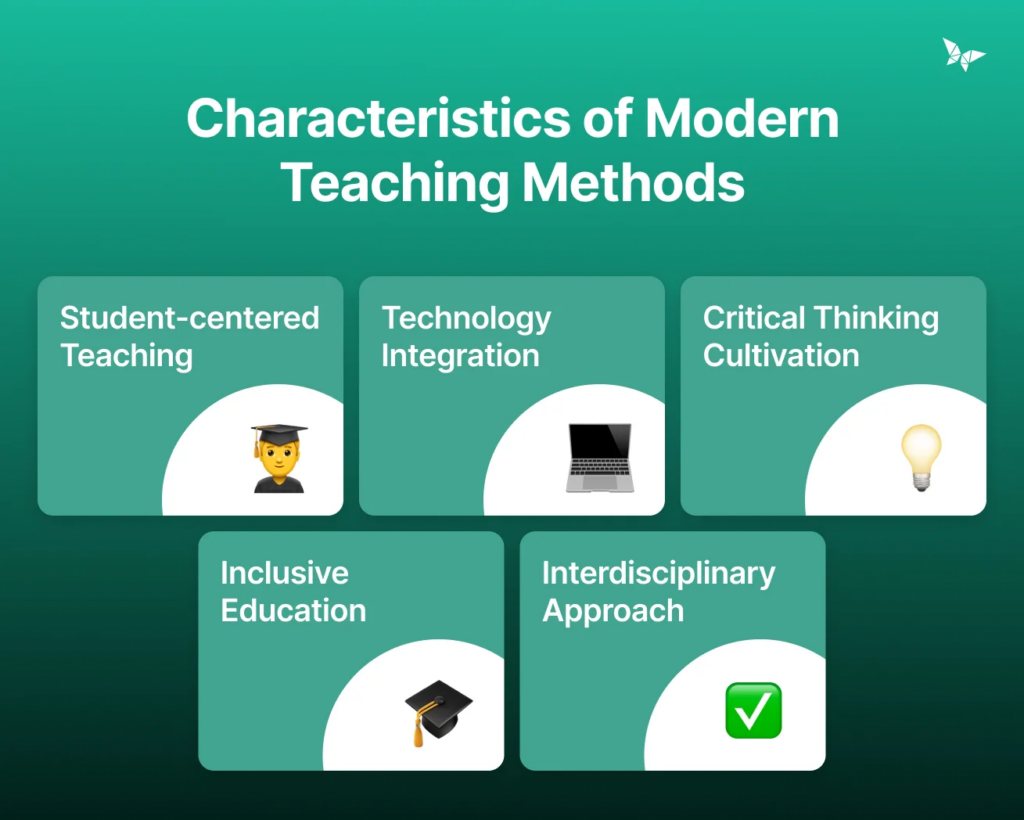
The good news is that you do not have to abandon everything you know. You simply need to rethink how you deliver it. These five modern teaching methods can transform the energy in your lecture hall and they can be introduced one at a time, at your own pace.
Teaching is not about transferring information. It is about creating the conditions in which learning can happen.— Adapted from constructivist learning theory
The 5 methods
1. Flipped learning
Instead of using class time to deliver content, you deliver it before class, through a short video, a reading, or an audio note. Students come to the lecture hall already introduced to the topic, and your contact time becomes a space for questions, application, and discussion. This works especially well in higher education where students have more autonomy over their schedules. Even a 5-minute pre-class video can shift the energy of an entire session.
Try it: Record a 5-min voice note on WhatsApp or a simple video before your next class.
2. Blended learning
Blended learning combines face-to-face teaching with digital activities. This does not require expensive equipment. A shared Google Form for student questions, a WhatsApp group for post-lecture discussion, or a simple class blog where students post weekly reflections, these are all blended approaches. The key is intentionality: decide which parts of learning happen in person and which happen online, and design both with equal care.
Try it: After each lecture, send one discussion question to a class WhatsApp group.
3. Discussion-based teaching
Rather than delivering a monologue, you facilitate a conversation. This means asking open questions, pausing for student responses, and creating space for disagreement and exploration. One powerful technique is “think-pair-share,” give students a question, let them think alone for 60 seconds, discuss with a neighbour, then share with the room. In a large lecture hall, this takes less than five minutes and dramatically increases engagement.
Try it: Start your next lecture with one open question instead of a recap slide.
4. Problem-based learning (PBL)
Students learn best when they are solving something real. In problem-based learning, you present a challenge first; a case study, a local issue, a professional dilemma and students acquire knowledge in order to address it. This approach is particularly effective in professional programmes like medicine, law, business, and engineering. It also prepares students for workplaces that reward thinking, not just recalling.
Try it: Begin one unit with a real-world problem relevant to your field in Lagos or Nigeria.
5. Microlearning
Microlearning means breaking content into short, focused units, typically 5 to 10 minutes long, each with a single learning objective. Rather than covering five topics in one hour, you might cover one topic deeply in 10 minutes, then pause, consolidate, and move to the next. This respects how the brain actually processes and retains information. It also makes your lectures easier to plan, because each segment has a clear beginning, middle, and end.
Try it: Divide your next 60-minute lecture into six 10-minute segments with a pause between each.
From a lecture hall in Lagos
At a federal university in Lagos, a lecturer in the Faculty of Education began using think-pair-share during her 200-level Introduction to Psychology class. She had 180 students, far too many for individual dialogue. Yet by pausing twice per lecture and asking students to turn to a neighbour and respond to a single question, she noticed something remarkable: attendance improved, students started arriving early, and examination scores on application-based questions rose noticeably within one semester.
She did not redesign her entire course. She added one small change. That is where most meaningful teaching improvements begin.
Your action step this week
Choose one of the five methods above, just one. Introduce it in your very next class. It does not need to be perfect. Observe what happens. Notice which students lean forward, which ask questions, which seem more alert. Then reflect: what would you keep? What would you adjust? Modern teaching is not a destination. It is a practice you build, one session at a time.