
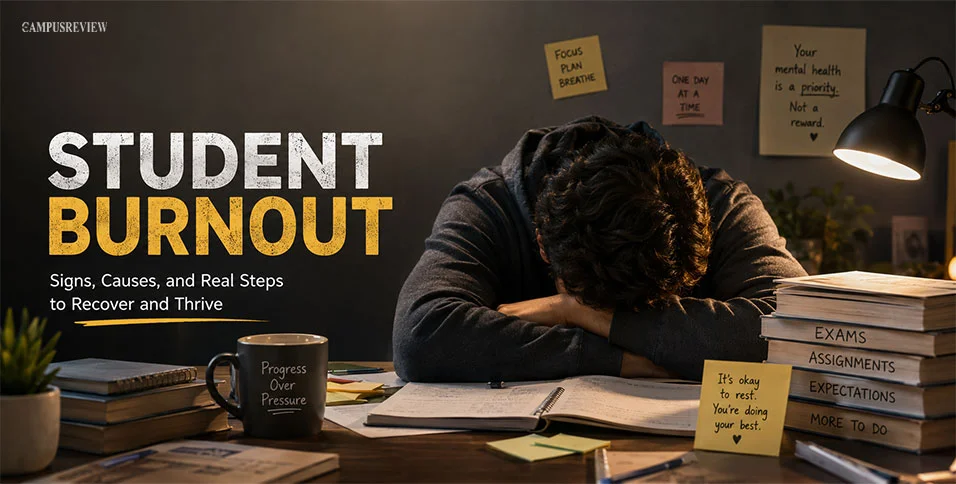
Burnout does not happen because you are weak or lazy. It happens because you have been pushing too hard for too long without enough recovery and your mind and body have finally decided to stop cooperating.
Introduction
You used to be the student who finished assignments early. The one who enjoyed reading ahead, who felt a particular satisfaction from a page of well-organized notes. But lately, something has shifted. Opening your textbook feels like lifting something very heavy. Deadlines that once motivated you now produce only dread. You sit at your desk for an hour and produce almost nothing, not because you cannot think, but because you no longer seem to care.
This is not laziness. It is not poor character. It is burnout and it is one of the most common and least discussed experiences in Nigerian student life.
Study burnout is what happens when the demands placed on a student, academic pressure, financial stress, family expectations, fear of failure, and a study culture that treats rest as weakness, consistently exceed the recovery time available to them. The brain, like any organ, has a finite capacity for sustained effort. When that capacity is depleted without adequate restoration, performance drops, motivation disappears, and the student who was once thriving begins to struggle in ways they cannot fully explain.
The good news is that burnout is not permanent. It is a signal, a loud, urgent signal that something in your approach needs to change. This post helps you understand what that signal is saying, and what to do when you hear it.
Rest is not a reward for finishing your work. It is part of the work itself, the part that makes everything else possible. – Adapted from performance psychology research
| Students reporting burnout symptoms ~60% at some point during their academic programme | Effect of burnout on performance Drops more study hours without recovery produces diminishing, then negative returns | Recovery time when caught early Days caught late, full recovery can take weeks or months |
What causes study burnout: the Nigerian student context
1. Chronic overload without recovery
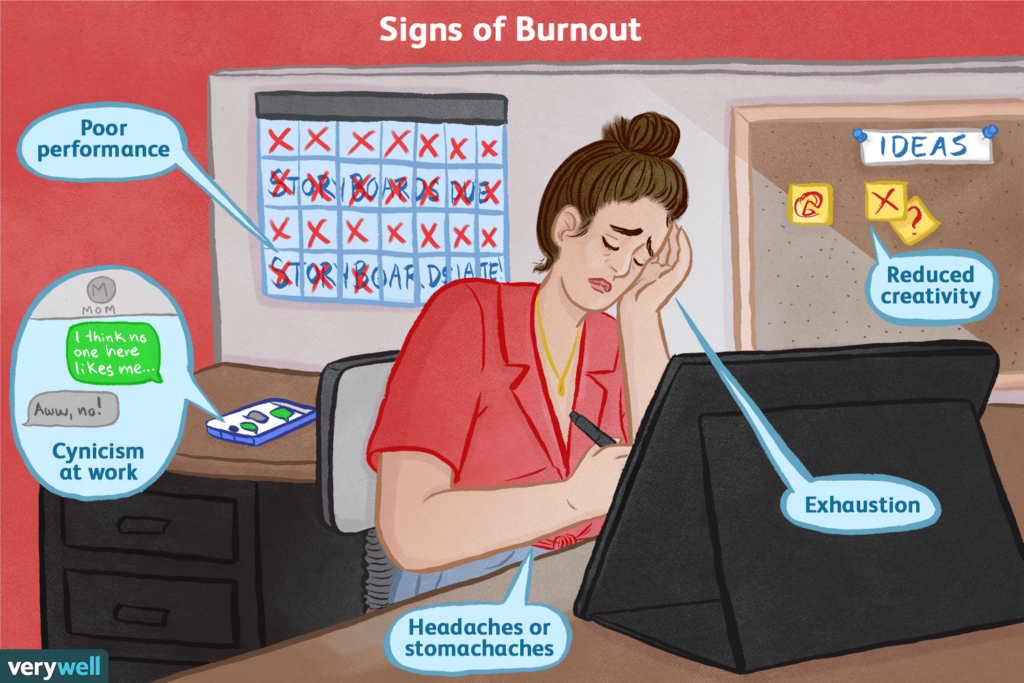
The most direct cause of burnout is sustained effort without adequate rest — studying for long hours daily, skipping weekends, sleeping less than the brain needs to consolidate learning. Nigerian university culture often glorifies this: “I studied all night” is worn as a badge of commitment rather than recognised as a warning sign. But cognitive performance follows a curve: sustained effort without rest produces diminishing returns, then exhaustion, then the inability to perform even simple tasks that once came easily. More hours do not equal more learning once the brain has exceeded its recovery threshold.
2. Family pressure and expectation
Many Nigerian students carry academic achievement not just as a personal goal but as a family obligation, the weight of parents’ sacrifices, siblings’ hopes, and the expectation of being the one who “makes it.” This is a profound source of motivation, but also of sustained anxiety that does not switch off when the books close. When every exam feels like a referendum on your worth to the people you love, the pressure never fully lifts and sustained pressure without relief is one of the clearest pathways to burnout.
3. Financial stress and competing responsibilities
A significant proportion of Nigerian university students simultaneously manage financial pressure, working part-time, contributing to household income, or worrying about fees. When the mental bandwidth required to manage these pressures is subtracted from the bandwidth available for studying, something has to give. Often, what gives first is sleep, then social connection, then the enjoyment of learning itself. The student who appeared to be burning out academically may in fact be burning out under the total load of their life, not just their coursework.
4. Loss of meaning and purpose
Burnout accelerates when students lose the sense of why their study matters. When every lecture feels like an obstacle to navigate rather than something to learn, when the course feels disconnected from anything that will matter in real life, when the goal has collapsed into “just pass” rather than “actually understand,” motivation withers. This is not a personal failing. It is often a signal that the student has been in survival mode for so long that the larger purpose of their education has become invisible to them. Recovery almost always involves reconnecting with some version of that purpose.
Warning signs: early and late stage
| Early warning signs | Late stage: act now |
| Difficulty concentrating for usual lengths of time | Complete inability to begin or sustain study |
| Mild procrastination on tasks you used to start easily | Persistent feelings of hopelessness about academic future |
| Feeling tired even after adequate sleep | Physical symptoms such as headaches, nausea, disrupted sleep |
| Mild irritability or low mood most days | Withdrawing from friends, family, and social life |
| Reduced enjoyment of things that usually bring pleasure | Feeling detached from your own goals and identity |
Five recovery strategies that actually work
1. Stop and give yourself permission to
The first and hardest step in recovering from burnout is accepting that continuing to push through it will make things worse, not better. When a muscle is torn, forcing it to keep performing causes greater damage. The same is true of cognitive burnout. Taking a deliberate break, even one day of complete rest, with no study, no guilt, and no productivity pressure, is not falling behind. It is the first act of recovery. Most students in burnout resist this because they believe rest is something to be earned after the work is done. But the work cannot be done well from a state of depletion. Rest is not the reward. It is the tool.
Try it: Take one full day this week with no study: no notes, no revision, no guilt. Notice how different you feel the following morning.
2. Restore sleep before anything else
Sleep is the single most powerful recovery tool the human body has and it is the first thing most burned-out students sacrifice. During sleep, the brain clears metabolic waste accumulated during sustained mental effort, consolidates memories, and restores the emotional regulation capacity that burnout depletes. No study strategy, supplement, or productivity technique compensates for chronic sleep deprivation. Before changing your revision schedule, before adjusting your diet, before trying any other recovery strategy, fix your sleep. Aim for seven to eight hours at consistent times. Remove screens from your sleeping space. Make the last 30 minutes before bed screen-free. Sleep is not a luxury. It is the foundation everything else rests on.
Try it: Set a consistent bedtime for the next seven days, the same time every night. No screens 30 minutes before.
3. Reconnect with people: don’t isolate

Burnout has a powerful pull toward isolation. When you feel depleted and behind, social interaction can feel like one more demand on your already exhausted resources, so you withdraw. But social connection is one of the most effective buffers against burnout, not a cost that deepens it. Spending time with people who know and care about you even one hour, even one conversation restores a sense of belonging and perspective that sustained isolation erodes. You do not need to discuss your burnout or seek advice. Simply being with people you trust, in a context that is not about academic performance, is itself restorative. In a Nigerian context, this might mean calling home, sharing a meal with a friend on campus, or attending a church or community gathering you have been skipping.
Try it: Make one social plan this week that has nothing to do with studying and keep it.
4. Return to study gradually, not all at once
After a period of rest, the instinct is often to compensate, to dive back in intensely, as if to make up for the time lost. This almost always triggers a relapse. Recovery from burnout requires a gradual re-entry: shorter study sessions (30 to 45 minutes), lower-stakes tasks first (reviewing rather than learning new material), and frequent breaks built in by design rather than added when exhaustion forces them. Choose one subject, one topic, one task to begin with. Finish it. Note that you finished it. That small completion rebuilds the sense of capability that burnout has eroded and each small completion makes the next one slightly easier.
Try it: When you return to study, begin with 25 minutes on one familiar topic. Stop when the timer ends, even if you feel you could continue.
5. Address the cause, not just the symptoms
Rest and recovery will ease the symptoms of burnout, but if the conditions that caused it remain unchanged, burnout will return. Before going back to your previous study routine, ask yourself honestly: what was it about that routine that led here? Was it the number of hours? The absence of breaks? The habit of studying without a clear stopping time? The pressure of comparing your progress to others? The feeling that rest had to be earned? Identifying the specific cause even one specific cause, gives you something concrete to change. Recovery from burnout is not a return to what you were doing before. It is a recalibration of how you work, built on the understanding that sustainable performance requires sustainable habits.
Try it: Write one sentence completing this: “The main thing that led to my burnout was…” Then write one change you will make before returning to your usual routine.
A four-phase recovery plan
| Phase | What to do and what to avoid |
| Days 1–2: Stop | No study. No revision. No academic tasks. Rest completely. Sleep, eat, connect with people you care about. Tell yourself this is the work right now, because it is. |
| Days 3–5: Restore | Begin restoring sleep routine. Light physical activity, even a 15-minute walk daily. Social connection. Avoid screens before bed. Do not open study materials yet. |
| Days 6–10: Re-enter | Return to study with short, structured sessions — 25 to 45 minutes, one subject at a time. Choose familiar review material first. Build in a break after every session. Stop on time. |
| Week 3+: Rebuild | Gradually increase session length and complexity. Introduce new material. Keep the recovery habits such as consistent sleep, breaks and social connection as permanent features of your study life, not temporary fixes. |
Six habits that prevent burnout long-term
| Study with a hard stop Decide when study ends before it begins. A session without an end time expands to fill anxiety, not capacity. | Protect sleep as non-negotiable Seven to eight hours at consistent times, not optional, not negotiable, not traded for a few more revision pages. | Move your body daily Even 15 minutes of walking reduces cortisol, improves mood, and sharpens focus for the study sessions that follow. |
| Maintain social connection One real conversation a day. Not social media, actual human connection. It restores more than you expect. | Reflect weekly, not just at results Ask yourself each Sunday: how did last week feel? What needs to change? Prevention lives in this honest question. | Rest without earning it first Rest is not the reward for completed work. It is the condition that makes good work possible. Practice taking it freely. |
From a student in Port Harcourt

A final-year Biochemistry student in Port Harcourt had been studying 10 to 12 hours a day in the four months leading up to her final examinations. She stopped going to Sunday service, something she had never missed. She stopped replying to her mother’s evening calls. She ate at her desk. She told herself she would rest after the exams.
Six weeks before her first paper, she found she could not read. Not because she lacked the literacy, but because the words refused to stay in her mind long enough to form meaning. She would read the same paragraph four times and remember nothing. She described it as “my brain just shutting the door.”
At the urging of a course mate, she took three full days away from her books, going home, sleeping, eating her mother’s cooking. When she returned to study on the fourth day, she completed more in three hours than she had in the previous week. Her brain had not abandoned her. It had simply needed her to stop long enough for it to recover.
She passed all her papers. She did not, afterwards, believe she had done so despite the break. She believed she had done so because of it.
Your action step this week
Read through the early warning signs above. If you recognize three or more in yourself right now, take that recognition seriously, not as failure, but as information. You are not behind because you burned out. You burned out because you cared enough to push past your limit and now your limit needs to be respected. Take one full day this week with no academic obligation, no guilt, and no plan to catch up immediately afterwards. That day is not lost time. It is the foundation on which the days that follow will be built.