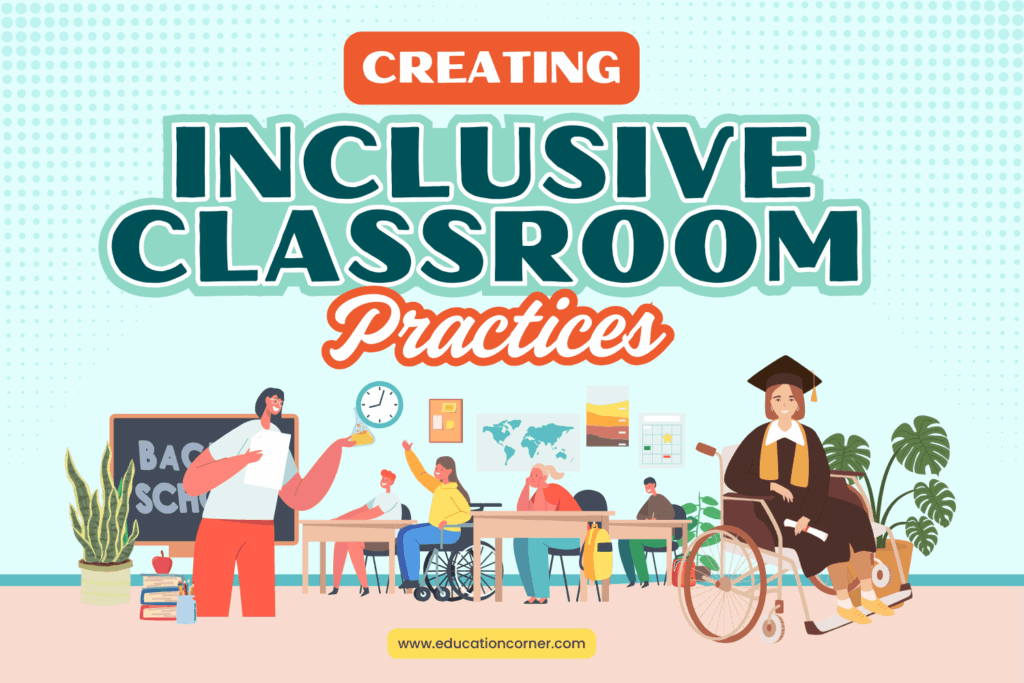
Every classroom already contains a wide range of learners with different abilities, paces, languages, and needs. Inclusive teaching is not an extra task layered onto your work. It is a way of designing lessons so that range is met, not ignored.
Introduction
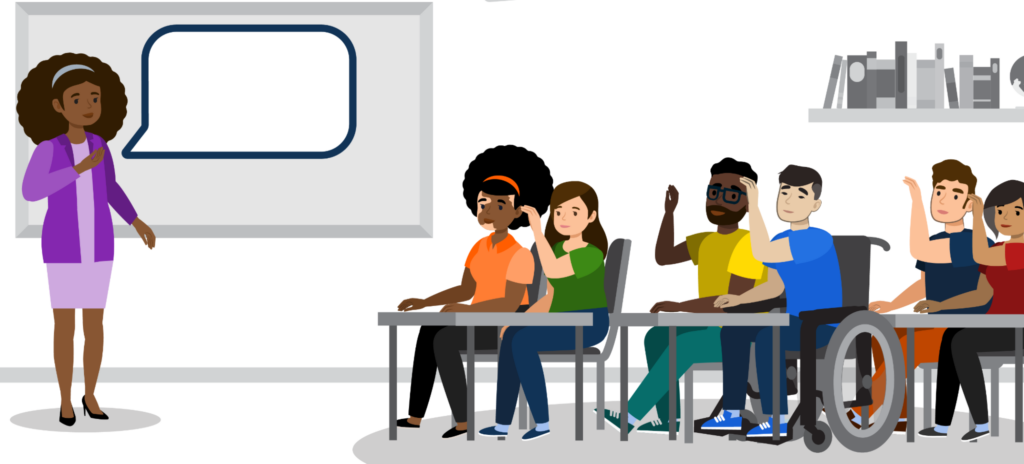
In any classroom of 40, 50, or 60 students, you are not teaching one learner repeated many times. You are teaching dozens of different learners, some who read fluently and some who are still decoding words, some who grasp a concept after one example and some who need it explained three different ways, some living with a diagnosed learning difficulty and many more who have never been assessed but are quietly struggling all the same.
A lesson designed for the “average” student in the room will reach fewer learners than it appears to. The strong students coast, under-challenged. The struggling students fall further behind, often silently, because asking for help in a crowded classroom feels risky. Inclusive teaching addresses this directly, not by creating a separate lesson for every child, but by building enough flexibility into one lesson that more students can access it.
Research from Nigerian classrooms shows this clearly: a study of primary school teachers in Enugu State found that teachers needed more guidance on how to manage large classes while differentiating instruction, and how to do so without watering down the curriculum. That tension of wanting to reach every learner while facing large classes and limited resources is real. The strategies below are chosen because they work within that constraint, not despite it.
Inclusion is not about treating every student the same. It is about giving every student what they need to reach the same goal. – Adapted from Universal Design for Learning principles
| Teachers reporting low DI use High due to time and class-size constraints, per Nigerian research | Differentiation methods available 8+ tiered tasks, flexible grouping, choice, learning centers, and more | Who benefits from inclusive practice All high achievers and struggling learners alike |
Five practices for inclusive teaching
1. Differentiate the task, not just the support
Differentiated instruction means adjusting content, process, or product so that students at different levels can engage meaningfully with the same lesson objective. In practice, this can be as simple as offering a tiered task: all students answer the same core question, but the materials or complexity vary. A struggling reader might work from a simplified passage while a stronger reader works from the full text, both are practising the same comprehension skill. Differentiated instruction is one of the central strategies teachers adopt to create more inclusive learning environments, and it does not require rewriting your lesson from scratch, only building in two or three levels of entry point.
Try it: For your next task, prepare one simplified and one extended version of the same core question.
2. Use flexible grouping deliberately
How you group students shapes who gets to participate and who gets left behind. The TAPS framework “Total group, Alone, Pair, Small group” gives you a simple set of options to rotate through within a single lesson. A student who struggles to contribute in a class discussion may speak freely in a pair. A student who needs more challenge can be grouped with similarly advanced peers for part of a task. Mixing groupings across a lesson, rather than relying on the same seating arrangement every day, gives every student multiple chances to engage in the format that suits them best.
Try it: Plan one lesson this week using at least two different groupings, for example, pair work followed by small-group sharing.
3. Present content in more than one format
Not every student learns best by listening to an explanation. Some need to see it written down, some need a diagram, and some need to physically do something with the material. Visual aids, hands-on activities, and offering choices in assignments or reading materials are practical ways to help all learners feel supported and included. This does not require new technology, a simple diagram on the chalkboard alongside your verbal explanation, or a physical demonstration alongside a written instruction, reaches students who would otherwise miss key information through one channel alone.
Try it: For your next key concept, explain it verbally, write it on the board, and demonstrate it physically if possible.
4. Offer choice in how students show understanding
Assessment does not need to look the same for every student to measure the same learning. One assignment does not fit all, looking at the various ways a student or group of students can demonstrate learning, and giving choices in the type of assignment, is a core inclusive strategy. A student with strong verbal skills but weak handwriting might demonstrate understanding through an oral explanation rather than a written essay. A student with a visual learning style might present a labelled diagram instead of a paragraph. Offering two or three formats for the same assessment objective allows more students to show what they actually know, rather than being limited by a format that does not suit them.
Try it: For your next assessment, offer students a choice between a written response and an oral or visual one.
5. Adapt assessment conditions where needed

For students with identified learning needs, whether formally diagnosed or simply observed by you over time, small adjustments to assessment conditions can make a significant difference without changing what is being tested. Adapting assessments through extra time or oral tests, alongside accessible materials, helps ensure tasks are both challenging and achievable for every student. This might mean giving a student with a processing difficulty a few extra minutes on a class test, or allowing a student with a writing difficulty to respond verbally to certain questions. These adjustments measure the same understanding through a fairer process.
Try it: Identify one student who may benefit from extra time or an alternate format, and adjust your next assessment accordingly.
From barrier to access
| Common barrier | Inclusive response |
| A student cannot keep up with the reading pace of the rest of the class. | Provide a simplified or shortened version of the same text, covering the same key ideas. |
| A student rarely speaks during whole-class discussion. | Use pair or small-group discussion first, so the student can rehearse their answer before speaking to the class. |
| A student finishes early and disengages while others catch up. | Prepare an extension task connected to the same topic, not unrelated busy work. |
| A student struggles to write quickly enough to complete a timed test. | Offer additional time or an oral component for that section, while keeping the content assessed the same. |
The TAPS grouping framework
| Format | When to use it |
| T – Total group | Introducing new content, setting expectations, whole-class discussion of a shared idea. |
| A – Alone | Independent practice, reflection, assessment, or processing time before sharing out. |
| P – Pair | Lower-stakes discussion, peer checking, think-pair-share before whole-class sharing. |
| S – Small group | Collaborative projects, mixed-ability problem solving, peer teaching and support. |
From a classroom in Enugu
A primary school teacher in Enugu State, teaching a basic science class of over 50 pupils with a wide spread of reading levels, began using a simple two-tier worksheet for every major topic, the same core diagram and questions, but with simplified vocabulary on one version. She also rotated her seating so that stronger readers and struggling readers worked together during paired tasks, allowing peer support without singling anyone out.
She did not have extra staff or specialised training. What changed was the structure of her lessons, which she built from the start to meet a range of learners, rather than adjusted after the fact for the few who fell behind.
Your action step this week
Choose one upcoming lesson and build in just one form of flexibility like a tiered task, a choice in how students respond, or a different grouping format partway through. You do not need to redesign your entire curriculum. Inclusive teaching grows one adjustment at a time, and each adjustment you make is one more student who can fully access what you are teaching.