Subject knowledge gets you into the classroom. Emotional intelligence determines what happens once you are there, for your students, and for you.
Introduction
You have two teachers. Both know their subject deeply. Both prepare their lessons carefully. But in one classroom, students raise their hands freely, trust the teacher with their confusion, and work through difficulty without shutting down. In the other, the atmosphere is tense; students hide mistakes, participation is forced, and conflict simmers beneath the surface of every lesson.
The difference is rarely about knowledge. It is almost always about emotional intelligence.
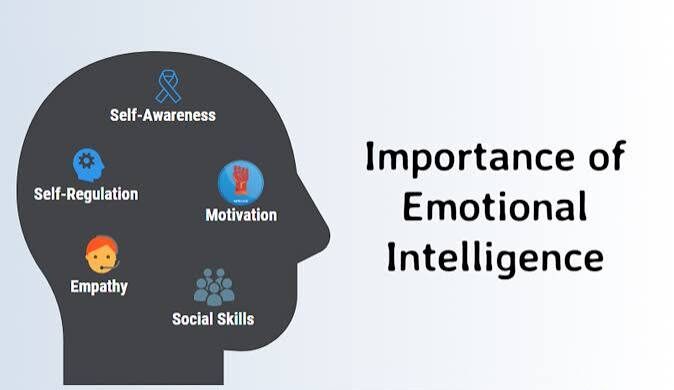
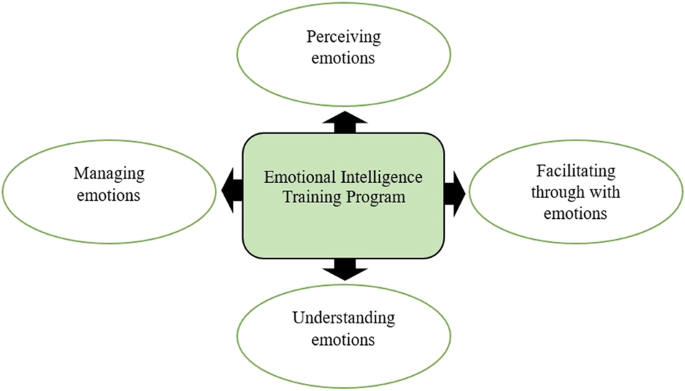
Emotional intelligence is the ability to recognise, understand, and manage emotions in yourself and others, it is not a personality trait that teachers either have or lack. It is a set of learnable skills that shape the quality of every interaction in a classroom: how a teacher responds to a struggling student, how they handle disruption without escalation, how they recover from a difficult day without carrying it into the next lesson, and how they build the trust that makes learning possible in the first place.
In a Nigerian classroom; often large, often under-resourced, often emotionally complex, these skills are not optional extras. They are the difference between a classroom that functions and one that thrives. The four domains below map the core of emotional intelligence as it applies directly to teaching practice.
Teaching is the one profession that creates every other profession. And at its heart, it is not a cognitive act. It is a relational one. – Adapted from teacher effectiveness research
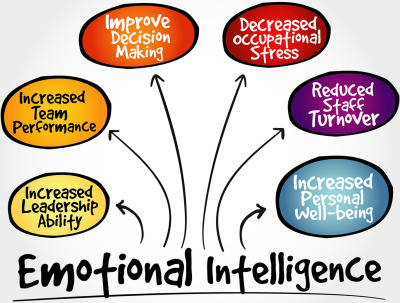
| EI’s effect on student outcomes Significant teachers with high EI report better student engagement and fewer behaviour issues | Teacher burnout linked to Low EI difficulty managing emotions is a primary driver of early career exit | EI is Learnable not fixed, it grows through deliberate reflection and practice |
The four domains of emotional intelligence in teaching
| Domain | What it looks like in the classroom |
| Self-awareness | Knowing when you are frustrated, tired, or triggered, before it shapes how you respond to students. Noticing your own patterns: “I tend to snap when I am rushed” or “I avoid certain students when I am overwhelmed.” |
| Self-regulation | Choosing your response rather than reacting automatically. Pausing before you speak in a tense moment. Managing your own stress without directing it at students. Recovering from a bad moment without carrying it through the rest of the lesson. |
| Empathy | Reading the room, noticing which students seem distracted, withdrawn, or upset. Understanding that a student’s behaviour often has a cause that has nothing to do with you or your lesson. Responding to what a student needs, not just what they are showing. |
| Social skill | Building trust over time through consistency, fairness, and follow-through. Navigating conflict without winners and losers. Knowing when to address a student publicly and when a quiet, private conversation will achieve far more. |
Five ways emotional intelligence improves teaching
1. It builds the trust that makes learning possible
Students do not learn well from teachers they do not trust. Trust in the classroom is built not through grand gestures but through small, consistent acts: greeting students by name, following through on what you said you would do, responding to wrong answers without ridicule, and noticing when a student is struggling before they ask for help. These are all expressions of emotional intelligence specifically, of empathy and social skill. When students trust their teacher, they take intellectual risks. They ask the questions they have been afraid to ask. They attempt tasks they expect to find difficult. Trust is the invisible infrastructure on which all classroom learning rests, and emotional intelligence is how you build it, one interaction at a time.
Try it: This week, notice one student who seems withdrawn and check in with them privately after class.
2. Self-awareness makes you a better teacher in real time
Most teachers reflect on their lessons after they are over, “that did not go well” or “I should have handled that differently.” Self-awareness allows you to reflect in real time, while the lesson is still happening: “I can feel myself getting impatient. What does this student actually need right now?” This in-the-moment awareness is one of the most powerful teaching skills there is, because it allows you to course-correct before small problems become large ones. It also prevents the very common pattern where a teacher’s personal stress, fatigue, or frustration becomes absorbed into the classroom atmosphere, felt by every student, experienced as an unpredictable and unsafe environment, and responded to with disengagement or disruption.
Try it: Before your next class, take 60 seconds to check in with yourself. How are you feeling? What do you need to leave outside the door?
3. It transforms how you handle conflict and disruption
Every teacher faces disruption. The difference between a teacher with high emotional intelligence and one without is not whether conflict occurs, it is what happens in the five seconds between the disruption and the response. A low-EI response escalates: a public confrontation, a raised voice, a punishment that embarrasses the student in front of peers and hardens their resistance. A high-EI response de-escalates: a calm, quiet redirection, a brief private word, a decision to address the behaviour later when both parties are regulated. Students who are publicly embarrassed do not learn from the experience, they plan their next act of resistance. Students who are addressed with dignity, even when being corrected, are far more likely to cooperate and far less likely to repeat the behaviour.
Try it: The next time a student disrupts, wait three seconds before responding. Notice how different your response is when you pause first.
4. Empathy reveals what behaviour is really communicating
A student who is consistently late is not necessarily disrespectful, they may be responsible for younger siblings before school. A student who refuses to participate may not be arrogant, they may have a deep fear of being wrong in public. A student who seems distracted may be processing something difficult at home that has nothing to do with your lesson. Empathy does not mean excusing behaviour or abandoning expectations. It means being curious about the cause before you respond to the symptom. In a Nigerian classroom, where students often carry significant family, economic, and social pressures, this curiosity is especially important. A teacher who asks “I wonder what is happening for this student” before deciding how to respond will consistently make better decisions than one who reads all behaviour at face value.
Try it: When a student’s behaviour puzzles or frustrates you, write one sentence asking what might be causing it before deciding how to respond.
5. It protects you: emotional intelligence prevents teacher burnout
Teaching is emotionally demanding work. You absorb the energy, frustration, and need of dozens of students for hours each day, often with very little support or recovery time built into the school structure. Teachers with low emotional intelligence, particularly those who struggle with self-regulation and self-awareness are significantly more likely to experience burnout, cynicism, and career exit within the first five years. Emotional intelligence does not remove the demands of the job. It gives you better tools for managing them: knowing when you need to step back, being able to process difficult interactions without ruminating on them for hours, and maintaining the sense of purpose that brought you into teaching in the first place. You cannot pour from an empty cup and EI is part of how you keep yours full.
Try it: At the end of each school day this week, write one sentence about something that went well. Not what was hard, what worked.
Low EI vs high EI in the classroom
| Low emotional intelligence | High emotional intelligence |
| Reacts to disruption immediately and publicly | Pauses before responding: chooses the reaction |
| Takes student behaviour personally | Stays curious about the cause of behaviour |
| Personal stress bleeds into the classroom | Manages personal stress before entering the room |
| Reads all behaviour at face value | Looks for what behaviour might be communicating |
| Rarely reflects: repeats the same patterns | Reflects regularly: adjusts and improves |
| Escalates conflict without realising it | De-escalates calmly: protects the student’s dignity |
Turning low-EI moments into high-EI responses
| What a low-EI response looks like | What a high-EI response looks like |
| “You are always disrupting my class. Go and stand outside.” | A quiet word after class: “I noticed you seemed restless today. Is everything alright? Let’s talk about how we can make this work better.” |
| Snapping at a student who asks a question you have already answered three times. | Pausing, recognising the frustration, and asking the class: “Who can explain this point in a different way for us?” |
| Arriving at class visibly upset from a staffroom argument and teaching the entire lesson in a cold, clipped tone. | Taking two minutes outside the classroom to breathe, reset, and choose to leave the issue outside the door before walking in. |
| Publicly embarrassing a student whose work is poor in front of the class. | Pulling the student aside privately: “I want to help you improve this. Let’s talk about what is making it difficult.” |
From a classroom in Ibadan
A primary school teacher in Ibadan had been struggling with one particular student, a boy in Primary 4 who was frequently disruptive, rarely completed work, and had been sent out of class more times than she could count. Frustrated and out of ideas, she decided to try something different: instead of responding to the next disruption, she simply observed him for two full days, asking herself what the behaviour might be communicating.
What she noticed changed everything. The disruption almost always occurred during reading activities. The boy was not defiant, he was lost. His reading level was two years behind his peers, and every reading task felt like a public exposure of something he was desperate to hide. Once she understood this, she stopped sending him out and started sitting with him briefly at the start of each reading task to quietly set him up for success.
Within three weeks, the disruptions had reduced by more than half. His participation in other parts of the lesson; the oral, non-reading parts, increased noticeably. Nothing in the classroom had changed except the lens through which she had decided to look at him.
Your action step this week
Choose one student who regularly challenges you, the one whose behaviour is hardest to manage or whose disengagement feels most frustrating. For the next five school days, observe rather than react. Ask yourself before every interaction: “What might this student be communicating right now that they cannot say out loud?” You do not need to solve anything immediately. Simply asking the question sincerely, will change the quality of every response you give. Emotional intelligence is not something you switch on. It is a habit of attention that grows every time you choose curiosity over reaction.