
A strong essay is not written in one sitting by a naturally gifted writer. It is built, step by step, by anyone willing to follow a clear process and that process can be learned.
Introduction
You have been given the essay question. You understand the topic. You even have something to say about it. And yet, staring at the blank page, the words refuse to come, or worse, they come in a tangle that does not seem to go anywhere.
This experience is almost universal, and it usually has nothing to do with intelligence or how well you understand the subject. It has to do with process. Students who consistently write strong essays are not necessarily better thinkers than their classmates. They have simply learned a reliable method for turning ideas into a structured, persuasive argument on paper.
The good news is that this method can be taught, practised, and improved, whether you are writing for a WAEC literature paper, a university coursework essay, or a scholarship application. The steps below break essay writing into manageable stages, so that the blank page becomes a starting point instead of an obstacle.
Clear writing is the result of clear thinking, made visible on the page, one structured paragraph at a time. – Adapted from academic writing pedagogy
| Essays with a clear thesis 2× more likely to score in the top grade bands | Time spent planning vs writing 20:80 recommended ratio for stronger structure | Essays improved by one round of editing ~90% most first drafts benefit significantly from revision |
Five steps from idea to finished essay
Step 1: Understand the question before you write anything
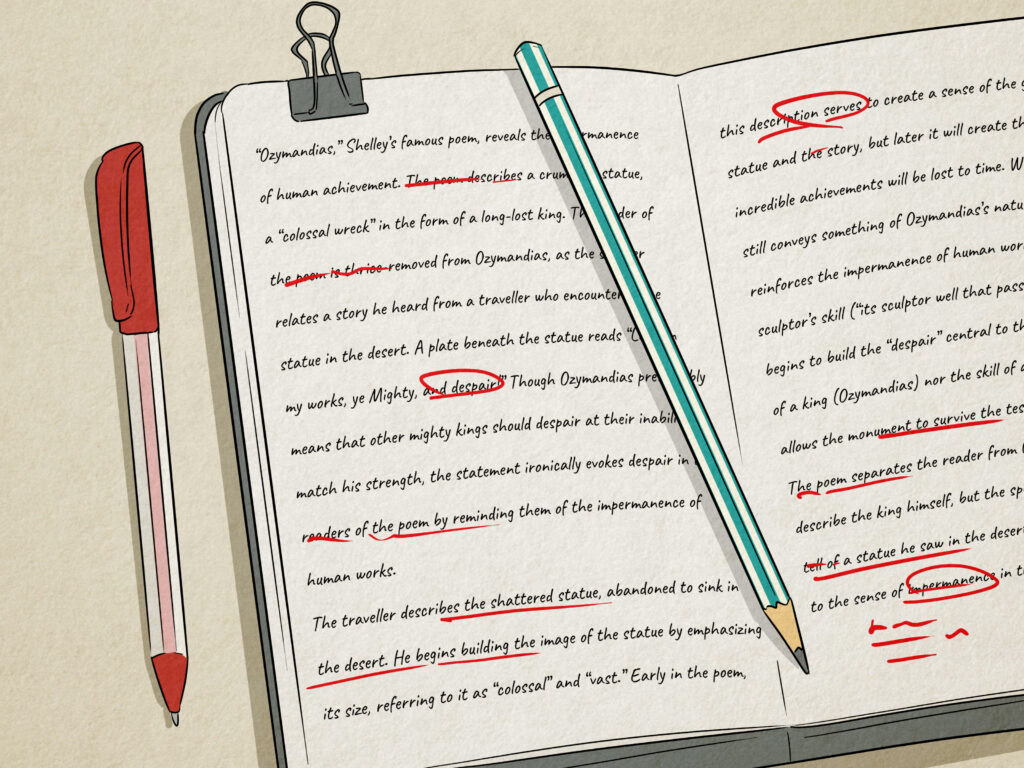
The single most common reason essays lose marks is not poor writing, it is answering a question the examiner did not ask. Before you write a single sentence, break the question down. Identify the instruction word (discuss, evaluate, compare, explain), the topic, and any limits placed on your answer. Underline these in the question itself. If you are asked to “evaluate the causes of,” your essay needs to weigh different causes against each other, not simply list them. Spending five extra minutes here saves you from writing a well-crafted essay that answers the wrong question.
Try it: Before your next essay, underline the instruction word and topic, then write the question in your own words.
Step 2: Build a one-sentence thesis
Your thesis is the single sentence that states your main argument, the answer to the question, in one clear claim. Every paragraph in your essay should connect back to this sentence. Without it, an essay drifts; with it, an essay has a spine. A weak thesis simply restates the question (“There are many causes of the Nigerian Civil War”). A strong thesis takes a position (“The Nigerian Civil War resulted primarily from unresolved political tensions following independence, though regional and economic factors deepened the conflict”). Write your thesis before you write your introduction in full, it will guide everything that follows.
Try it: Write your thesis as a single sentence before drafting your introduction.
Step 3: Outline before you draft
Writing without a plan is like building without a foundation, it can be done, but it rarely stands well. Before drafting, list your three to five main points in the order you will present them. For each point, jot down the evidence or example you will use to support it. This outline does not need to be detailed, a few words per point is enough. What matters is that you decide your structure before you start writing prose, so that each paragraph has a clear job to do and your argument builds logically from one point to the next, rather than wandering.
Try it: Spend 10 minutes outlining your main points and evidence before writing your first paragraph.
Step 4: Support every claim with evidence
A claim without evidence is an opinion. A claim with evidence is an argument. For every point you make, ask yourself: how do I know this is true, and how can I show the reader? Evidence can be a fact, a statistic, a quotation, a historical event, or a specific example from a text. The PEEL structure is useful here: Point, Evidence, Explanation, Link. State your point, give your evidence, explain how the evidence supports the point, then link back to your thesis. This structure prevents paragraphs that simply assert an idea without backing it up; one of the most common weaknesses examiners flag.
Try it: Rewrite one paragraph from a recent essay using the PEEL structure.
Step 5: Edit for clarity, not just spelling
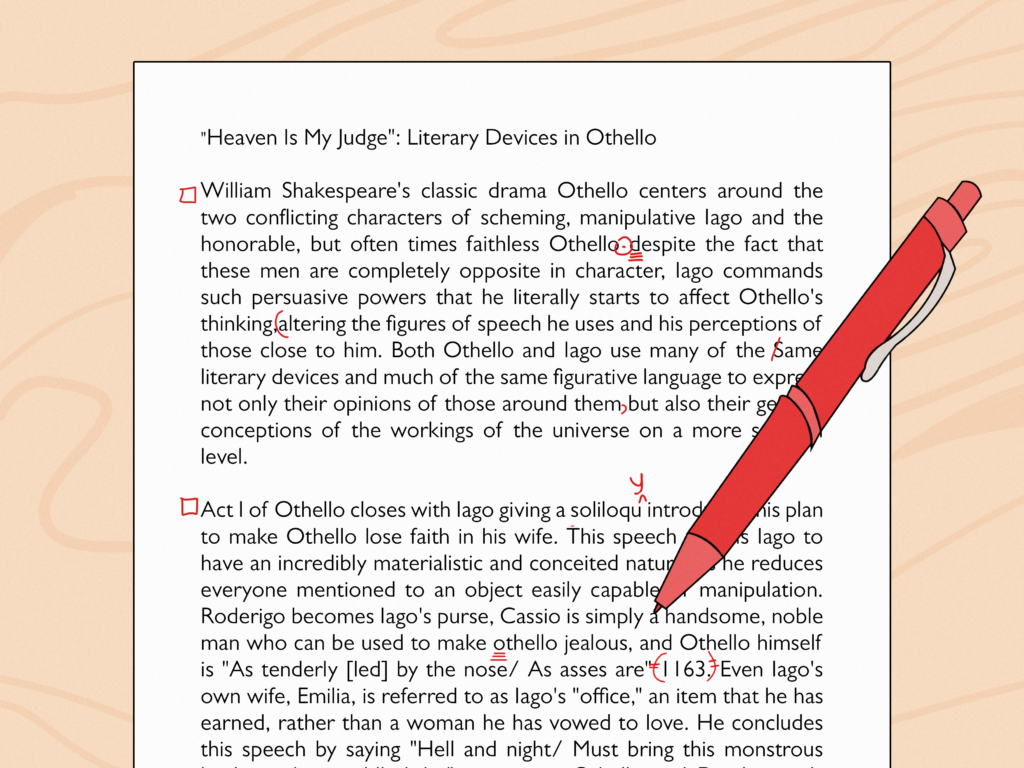
Most students edit only for spelling and grammar; a final check that catches typos but misses deeper problems. True editing asks harder questions: Does each paragraph connect to the thesis? Is the argument easy to follow? Are there sentences that could be cut without losing meaning? Read your essay aloud, awkward phrasing becomes obvious when heard rather than just seen. If possible, leave at least a few hours between finishing your draft and editing it; distance makes problems easier to spot. A clear, focused essay with a few minor errors will almost always outscore a polished essay with a muddled argument.
Try it: Read your next essay draft aloud before submitting, and cut one sentence that does not add value.
Weak essay habits vs strong essay habits
| Weak habits | Strong habits |
| Starting to write before understanding the question | Breaking down the question before writing a word |
| No clear thesis; the argument is implied, not stated | Writing a clear, arguable one-sentence thesis |
| Listing points without connecting them to each other | Outlining points in a logical order before drafting |
| Making claims with no supporting evidence | Using PEEL to support every point with evidence |
| Submitting the first draft without editing | Editing for clarity and reading the draft aloud |
A simple essay structure
| Section | Purpose | Length |
| Introduction | Hook the reader, give context, state your thesis clearly | ~10% |
| Body paragraph 1 | First main point, using the PEEL structure | ~25% |
| Body paragraph 2 | Second main point, building on the first | ~25% |
| Body paragraph 3 | Third main point or counter-argument addressed | ~25% |
| Conclusion | Restate thesis in new words, summarise key points, close firmly | ~15% |
Turning a weak paragraph into a strong one
| Weak | Strong |
| “Education is important in Nigeria. Many people think school helps you get a job.” | “Access to quality education directly affects employment outcomes in Nigeria. According to recent labour data, graduates are significantly more likely to secure formal employment than those without post-secondary education, which links educational access to economic mobility.” |
| “This shows that the character was wrong. The story proves this point clearly.” | “The character’s decision to abandon his post reveals a deeper conflict between personal loyalty and public duty, a tension the author reinforces through the contrast between his private guilt and his public composure.” |
From a student in Surulere, Lagos
A 300-level student at a Lagos university had consistently scored in the 50s on his coursework essays, despite understanding his course material well. His lecturer pointed out that his essays lacked a clear thesis, each one read like a collection of facts rather than an argument. He began writing a single thesis sentence before every essay and outlining his points before drafting.
On his next assignment, using the same level of subject knowledge he already had, his score rose to the high 60s. The content of his thinking had not changed. The structure that carried it to the page had.
Your action step this week
Before your next essay, do just one thing differently: write your thesis as a single sentence before you write anything else. If you cannot state your argument in one sentence, you are not ready to start writing the essay, you need a few more minutes of thinking first. That single sentence is the spine your entire essay will hang from, and it is the fastest way to move from scattered ideas to a focused, persuasive paper.