
An assignment does not have to feel like punishment to be rigorous. The best assessments are ones students approach with curiosity, because they feel relevant, creative, and worth the effort.
Introduction

Here is a scene that plays out every semester in universities across Nigeria. A lecturer announces an assignment: a 3,000-word essay on a topic from the syllabus, submitted in two weeks, formatted in a specific way, assessed against criteria that feel abstract. Students receive the brief, note the deadline, and set the task aside until the final 48 hours, at which point they produce something just good enough to pass, and both lecturer and student know it.
This is not a story about student laziness. It is a story about assignment design. When an assignment feels disconnected from a student’s life, disconnected from anything that will matter beyond the submission date, and designed primarily to test recall rather than thinking, students respond with the minimum investment needed to complete it. The assignment has told them, implicitly, that its value is the grade, not the learning.
Interactive assignments change this dynamic. They are designed around genuine problems, real audiences, meaningful choices, and creative application of knowledge. They still assess the same academic content, but they do so in ways that invite students to care about the task itself, not just the mark at the end of it. And when students care about the task, the quality of what they produce changes profoundly.
The five principles below show you how to design assignments your students will approach with energy rather than obligation, without abandoning academic rigour or making your marking harder.
An assignment is a learning experience, not just an evaluation event. Design it like one and watch what students are actually capable of. – Adapted from assessment design literature
| Students who find assignments meaningful 2× more likely to invest genuine effort and produce higher quality work | Effect of student choice on task completion +41% even minor autonomy in assignment format significantly lifts engagement | Real-world relevance and retention Stronger applied tasks produce deeper, longer-lasting learning than recall tasks |
Passive assignments vs interactive assignments
| Passive assignment design | Interactive assignment design |
| One prescribed format for all students | Choice in format, topic, or approach within set criteria |
| Tests recall of information already in notes | Requires application, analysis, or creation, not just recall |
| Abstract topic with no real-world anchor | Rooted in a real problem, context, or community |
| Individual only, no collaboration involved | Includes peer collaboration, review, or discussion |
| Audience is only the lecturer who marks it | Designed for a real or realistic audience beyond the lecturer |
Five principles of interactive assignment design
1. Anchor the task in a real-world problem
The fastest way to shift a student’s engagement with an assignment is to give it a real-world anchor, a genuine problem, context, or question that exists beyond the lecture hall. Instead of “Write an essay on the causes of poverty in Nigeria,” try “You have been asked to advise a local government on one practical intervention to reduce food insecurity in a low-income community. Write a 1,500-word policy brief with evidence-based recommendations.” The academic content being assessed is identical. But the second version gives students a role, a purpose, and a real human situation to solve, and that changes everything about how they approach the work. Nigerian contexts are especially rich for this: urban planning challenges, public health gaps, business development needs, legal access issues, and environmental problems are all available as authentic assignment anchors that make the academic content feel urgent and relevant.
Try it: Take your next essay assignment and add one sentence that gives it a real audience and purpose: “You are advising… / You have been commissioned to… / A community organisation has asked you to…”
2. Build in meaningful student choice
Autonomy is one of the strongest predictors of intrinsic motivation and you can introduce it into assignment design without losing control of what is being assessed. Offer students a choice of topic from a curated shortlist. Allow them to select from two or three different formats; a written report, an oral presentation, a structured case analysis, while assessing the same underlying skills. Let students propose their own real-world context for a case study, subject to your approval. The key distinction is between structured choice, options that all meet the learning objective and open-ended choice, which can dilute academic focus. Structured choice keeps the assessment rigorous while signalling to students that their perspective, context, and interest are legitimate parts of the academic process. That signal, more than any other design feature, changes how invested students feel in their own work.
Try it: For your next assignment, offer students two topic options or two format options, not both, just one dimension of choice to start.
3. Design for collaboration, not just individual output
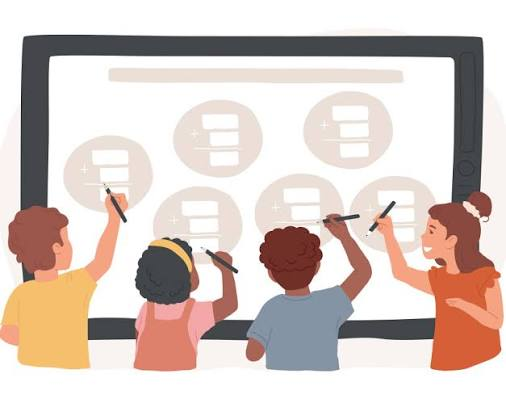
Most assignments in Nigerian higher education are individual tasks, submitted alone, marked alone, returned alone. Interactive assignment design includes moments of genuine collaboration: peer review, group research with individual written-up findings, structured debate preparation in pairs, or a team project with individually assessed contributions. Collaboration does not mean group work that allows one student to carry the others, it means designing tasks where the collaborative stage produces something students could not have produced alone, while the individual stage ensures each person is accountable for their own understanding. A well-designed collaborative assignment also builds the teamwork and communication skills employers consistently say graduates lack, making it academically and professionally valuable at the same time.
Try it: Add a peer review stage to your next individual assignment, students exchange drafts and give one specific piece of written feedback before final submission.
4. Invite creation, not just reproduction
Traditional assignments ask students to reproduce: summarize the literature, describe the theory, list the causes, explain the process. Interactive assignments ask students to create: design a campaign, draft a proposal, build a model, produce a resource, write a report for a real stakeholder, develop a plan. Creation requires the same academic knowledge, but it also requires application, judgment, and decision-making. A student who has to design a public health awareness leaflet for a community in Lagos must understand the public health content deeply enough to translate it into clear, accessible language for a non-expert audience. That level of engagement is qualitatively different from the level required to write a definition. Creation-based assignments also produce work that students are genuinely proud of, because it is theirs in a way that a generic essay rarely is.
Try it: Replace one “describe or explain” task this semester with a “design, draft, or produce” task on the same content.
5. Assess the process, not only the product
One of the reasons students rush assignments at the last minute is that the process; the research, the drafting, the revision, the thinking, is invisible to the assessment. Only the final product is marked, so only the final product receives attention. Building process milestones into assignment design changes this: a brief proposal submitted in week one, a draft outline reviewed in week two, a peer feedback exchange in week three, and a final submission in week four. Each stage is low-stakes but compulsory, and together they ensure the work is built over time rather than in a single exhausted night. This approach also gives you natural checkpoints to catch students who are struggling early, when intervention is still possible, rather than discovering the problem when you are reading a final submission that clearly went wrong from the start.
Try it: For your next major assignment, introduce one mandatory checkpoint, a 200-word topic proposal due one week after the brief is released.
Interactive assignment ideas by subject
| Law Mock client brief Students advise a fictional client on a real legal issue, drafting a legal opinion letter rather than a generic essay on the doctrine. | Business / Economics Business feasibility report Students assess the viability of a real or fictional Nigerian business idea, applying course frameworks to a concrete commercial context. | Public Health Community health plan Students design a health intervention for a specific Lagos neighbourhood, audience-targeted, evidence-based, and locally grounded. |
| Engineering Design critique Students analyse an existing infrastructure project in Nigeria, identifying design decisions, constraints, and what they would change and why. | Education Lesson design challenge Students design a complete lesson for a specified age group and subject, including objectives, activities, and assessment, then peer-evaluate each other’s plans. | Literature / Arts Creative response Students respond to a set text through an original creative piece, a monologue, a reimagined scene, a critical letter, with a reflective commentary explaining their choices. |
How to assess interactive assignments fairly
| CriterionWhat to assess and how | |
| Content accuracy | Is the academic content correct, relevant, and appropriately referenced? This criterion applies equally to interactive and traditional formats. |
| Application | Has the student applied course concepts to the task rather than simply restating them? Look for evidence of analysis, judgment, and reasoned decision-making. |
| Clarity and structure | Is the argument or proposal clearly organized and easy to follow? Adjust this criterion to fit the format, a policy brief has different structure expectations than an essay. |
| Relevance to context | Has the student engaged meaningfully with the real-world anchor? Is the response appropriate for the audience and purpose stated in the brief? |
| Process evidence | Where milestones are built in proposals, drafts, peer feedback, assess whether the student engaged with the process, not just the product. |
From a lecture hall in Abuja

A lecturer in the Department of Mass Communication at a federal university in Abuja had been setting the same essay-based assignments for four years. Student engagement was low, submissions were formulaic, and a significant proportion showed clear signs of being produced in the final 24 hours. He redesigned one assessment, a traditional essay on media ethics into a group-produced investigative podcast episode, with each student responsible for one individually written segment that was peer-reviewed before recording.
The results surprised him. Students stayed in the library past closing time. They sought him out during office hours, not because they were struggling, but because they wanted to get the project right. The quality of the academic content in the individual written segments was the highest he had seen in four years of teaching the module. Several students said it was the most enjoyable assignment they had completed in their entire programme.
He had not lowered his standards. He had changed the container in which the standard was applied and the students had risen to it.
Your action step this week
Take one upcoming assignment brief and apply just one of the five principles above. Add a real-world anchor to an existing essay question. Offer two format options for a task students have previously only done one way. Add a peer review stage before final submission. You do not need to redesign your entire assessment strategy at once, one principle, applied once, is enough to show you what your students are capable of when an assignment gives them a genuine reason to try.