

Nervous about your thesis or project defense? This guide explains how to defend your project with confidence, from preparing your slides to answering difficult questions effectively.
Introduction
The thesis or project defense is one of the most significant milestones in every student’s academic journey. After months of research, writing, and revisions, you are required to present your work before a panel of lecturers or examiners who will evaluate your knowledge, effort, and understanding of your research.
For many students, this process can be nerve-wracking. However, with proper preparation and the right mindset, you can approach your defense with confidence and leave a strong impression on your panel.
This article provides a step-by-step guide on how to defend your project or thesis with confidence, covering everything from preparation to presentation and handling questions.
Why the Thesis or Project Defense Matters
The defense is not simply a formality. It is an academic exercise that:
- Demonstrates your understanding of your research topic.
- Shows your ability to communicate findings clearly and logically.
- Tests your capacity to think critically and respond to questions.
- Provides an opportunity to justify your methodology and conclusions.
A strong defense reflects your competence as a researcher and reinforces the value of your work.
Step 1: Understand the Structure of a Defense

While formats differ across universities, most thesis defenses follow a similar structure:
- Opening Remarks: The panel introduces the session and outlines expectations.
- Presentation: The student presents the project using slides or summaries.
- Question and Answer Session: Examiners ask questions to test understanding.
- Feedback and Recommendations: The panel provides comments and suggestions.
- Final Verdict: A decision is given—approval, corrections, or, in rare cases, rejection.
Understanding this structure helps you anticipate what to expect and prepare accordingly.
Step 2: Prepare Your Presentation Slides
Your presentation is often the first impression you give. Slides should be clear, concise, and visually appealing.
Tips for Effective Slides:
- Keep slides simple: avoid overcrowding with too much text.
- Use bullet points instead of long sentences.
- Include charts, graphs, and visuals where necessary.
- Highlight only the most important findings and arguments.
- Ensure consistency in font style and size.
A typical slide structure may include:
- Title of your research.
- Introduction and background.
- Problem statement.
- Objectives of the study.
- Research questions or hypotheses.
- Methodology.
- Data presentation and analysis.
- Key findings.
- Recommendations.
- Conclusion.
Step 3: Master Your Content
The most important element of your defense is your mastery of the research itself. You must demonstrate that you truly understand your work.
How to master your content:
- Review your thesis thoroughly. Read it several times before the defense.
- Pay close attention to your methodology, findings, and conclusions.
- Be ready to explain why you chose your research methods.
- Familiarize yourself with key literature in your field to justify your arguments.
Step 4: Anticipate Possible Questions
Examiners often ask questions to test your critical thinking. While you cannot predict every question, you can anticipate the common types:

- Clarification Questions: What do you mean by this concept?
- Methodology Questions: Why did you choose this method instead of another?
- Data Analysis Questions: How did you interpret these results?
- Application Questions: How does your study benefit the real world?
- Limitations Questions: What were the weaknesses of your study?
By preparing responses in advance, you will not be caught off guard.
Step 5: Practice, Practice, Practice
Practice reduces nervousness and builds confidence.
Ways to practice:
- Rehearse your presentation in front of friends, colleagues, or a mentor.
- Time yourself to ensure your presentation fits within the allotted period.
- Record yourself and review your body language, tone, and clarity.
- Conduct mock defense sessions to simulate real conditions.
Step 6: Work on Your Communication Skills
Even if your research is strong, poor communication can weaken your defense. Examiners expect clarity, confidence, and professionalism.
Tips for effective communication:
- Maintain eye contact with your audience.
- Speak slowly and clearly. Avoid rushing.
- Use formal academic language.
- Avoid filler words such as “um” or “like.”
- Use hand gestures moderately to emphasize points.
Step 7: Manage Nervousness
It is normal to feel nervous during your defense, but nerves should not control you.
Ways to manage nervousness:
- Practice deep breathing before and during the presentation.
- Focus on your message rather than your fear.
- Visualize yourself succeeding in the defense.
- Arrive early to familiarize yourself with the environment.
Confidence grows with preparation, so the more prepared you are, the less anxious you will feel.
Step 8: Handle Questions Professionally
Your ability to respond to questions may influence the panel’s impression of your work.
Strategies for handling questions:
- Listen carefully before answering. Do not interrupt.
- If you do not understand the question, politely ask for clarification.
- Answer directly and concisely. Avoid rambling.
- If you do not know the answer, acknowledge it respectfully and suggest possible approaches.
- Stay calm even if a question feels challenging or critical.
Remember that questions are not meant to intimidate you; they are designed to test your understanding.
Step 9: Dress and Present Professionally
Appearance influences perception. Dressing neatly and appropriately shows respect for the process.
Tips:
- Wear formal or semi-formal academic attire.
- Ensure your clothing is clean and comfortable.
- Maintain good posture throughout the presentation.
Professional presentation boosts credibility and confidence.
Step 10: Accept Feedback Gracefully
After your defense, the panel will provide feedback. Whether positive or critical, accept it professionally.
- Avoid arguing defensively with examiners.
- Take notes on recommendations.
- Show appreciation for constructive criticism.
- Use the feedback to improve your work.
Graceful acceptance demonstrates maturity and professionalism.
Common Mistakes to Avoid in a Defense
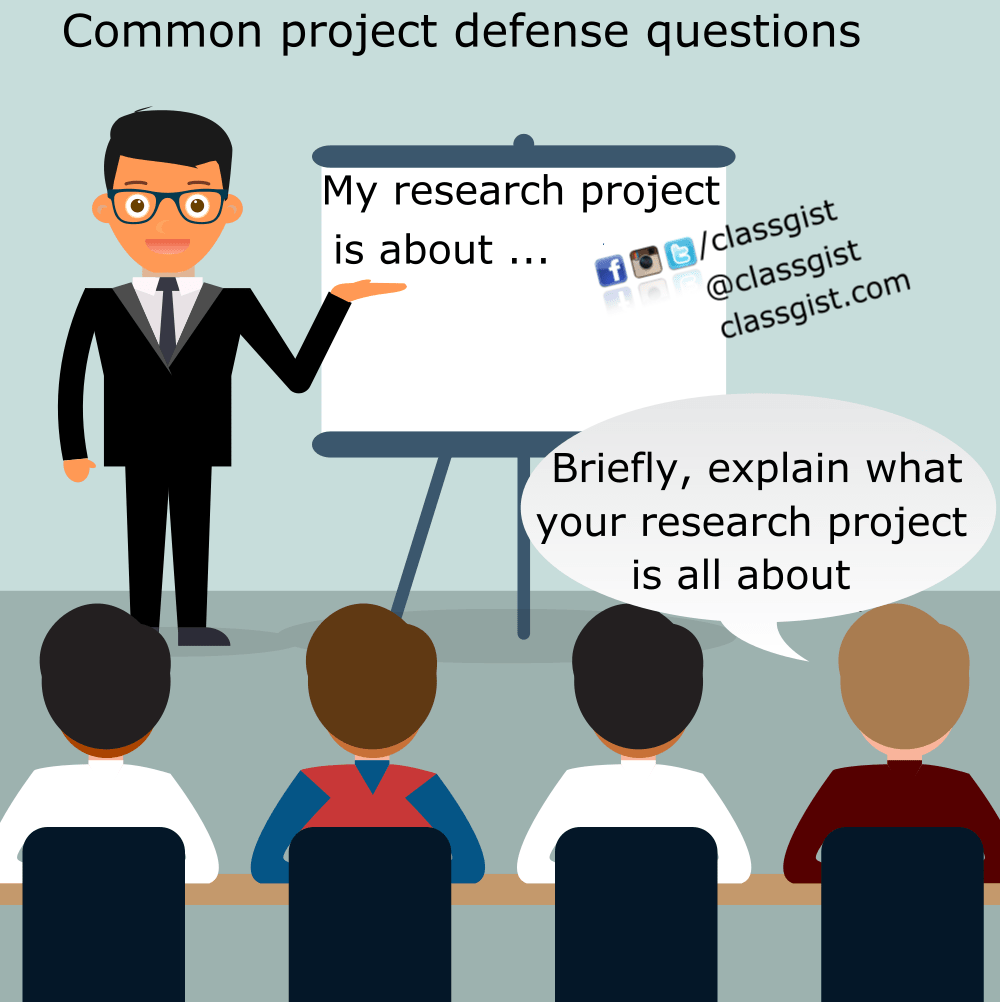
- Reading directly from slides or notes instead of explaining concepts.
- Overloading slides with text and irrelevant details.
- Failing to practice beforehand.
- Speaking too quickly or too softly.
- Becoming defensive or argumentative when corrected.
- Neglecting time management and exceeding the presentation limit.
Conclusion
Defending a thesis or project is an academic challenge that requires preparation, confidence, and effective communication. By understanding the defense structure, mastering your research, preparing your slides, and practicing thoroughly, you can present your work with confidence and professionalism.
Remember, the panel is not there to fail you but to ensure you understand and can justify your work. A well-prepared and confident student leaves a lasting impression and increases the chances of a successful defense. Also Check the HERE for more