

Struggling with poor grades or last-minute cramming? Learn the best study habits every university student should adopt, from time management to active learning and exam preparation.
Introduction

University life can be overwhelming. With assignments, lectures, tests, and social commitments, many students struggle to keep up with their academics. While intelligence plays a role in academic success, what truly separates high-performing students from others is their study habits.
Good study habits not only improve grades but also reduce stress, enhance memory, and build discipline that benefits students beyond the classroom.
In this article, we’ll explore proven study habits every university student should cultivate, supported by research, practical examples, and actionable tips.
Why Study Habits Matter in University
Your university years are more than just about passing exams—they prepare you for real-life problem-solving and professional work. Developing the right study habits can:
- Improve your concentration and memory retention.
- Help you manage time effectively.
- Reduce last-minute exam pressure.
- Build self-discipline that lasts beyond university.
Simply put, good study habits are the backbone of academic success.
Habit 1: Master the Art of Time Management
Time management is perhaps the most important study habit for university students. Without it, you’ll constantly find yourself cramming, missing deadlines, or feeling stressed.
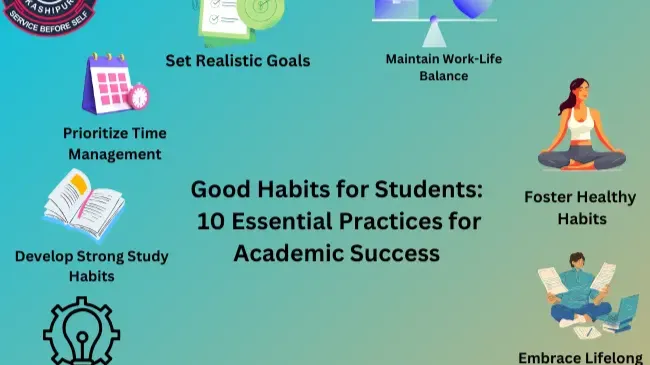
How to Manage Time Effectively:
- Create a Study Schedule: Allocate specific hours for study, rest, and social activities. Stick to it as much as possible.
- Prioritize Tasks: Use the Eisenhower Matrix (urgent vs. important) to rank assignments and study goals.
- Use Time Blocks: Break study sessions into 25–50 minute blocks with short breaks in between (Pomodoro Technique).
Example: Instead of studying randomly, a student can set 7–9 pm daily for reviewing lecture notes, ensuring consistency.
Habit 2: Develop Effective Note-Taking Skills
Many students attend lectures but fail to take meaningful notes. Good notes help you remember, organize, and review information effectively.
Popular Note-Taking Methods:
- Cornell Method: Divide your page into three sections: notes, cues, and summary.
- Mind Mapping: Use diagrams to connect related concepts.
- Outlining: Use bullet points and indentation for structured topics.
Pro Tip: Avoid copying lecturers word-for-word. Instead, summarize in your own words for better understanding.
Habit 3: Create a Conducive Study Environment
Your environment affects how well you study. A noisy, cluttered, or distracting space can reduce focus.
Tips for a Good Study Space:
- Choose a quiet location (library, study room, or a calm corner at home).
- Keep your desk organized with only study materials.
- Eliminate distractions (silence your phone or use focus apps).
- Ensure good lighting and ventilation for comfort.
Example: A student who studies in a quiet library may absorb concepts faster than one who studies in a noisy dormitory.
Habit 4: Practice Active Learning
Passive reading is one of the biggest mistakes students make. Active learning involves engaging with material in ways that promote deeper understanding.
Ways to Study Actively:
- Ask Questions: Challenge what you read—why, how, and what if.
- Teach Others: Explaining a concept to a friend reinforces your understanding.
- Use Flashcards: Great for memorizing definitions, formulas, and key points.
- Self-Testing: Regularly quiz yourself instead of just re-reading notes.
Research shows that students who test themselves recall information better than those who only read passively.
Habit 5: Break Down Big Tasks into Smaller Goals
Large projects or exam preparation can feel overwhelming. Breaking them into smaller, manageable goals reduces anxiety and improves productivity.
Example:
Instead of saying “I’ll study Biology today,” break it down:
- Read Chapter 3 (Cell Division).
- Summarize notes in 2 pages.
- Answer 5 past exam questions.
Completing smaller tasks gives a sense of achievement and keeps motivation high.
Habit 6: Stay Consistent with Daily Revision
Consistency beats last-minute cramming every time. Reviewing notes daily reinforces memory and prevents forgetting.
How to Revise Effectively:
- Spend 15–30 minutes after lectures to review notes.
- Use spaced repetition techniques (review material at increasing intervals).
- Highlight key terms and make summary sheets.
Students who revise consistently often perform better than those who cram the night before exams.
Habit 7: Use Technology Wisely
Technology can be both a blessing and a curse for students. Social media often distracts, but when used wisely, tech tools can boost learning.
Useful Study Apps:
- Evernote/Notion: For organizing notes.
- Quizlet/Anki: For flashcards and spaced repetition.
- Google Scholar: For research and academic sources.
- Forest App: Helps reduce phone distractions while studying.
Tip: Set screen-time limits to avoid spending hours scrolling through TikTok instead of revising.
Habit 8: Prioritize Health and Well-being
Studying for long hours without taking care of your body and mind reduces efficiency.
Health Tips for Students:
- Get at least 7–8 hours of sleep daily.
- Eat balanced meals instead of surviving on junk food.
- Exercise regularly to boost energy and focus.
- Take short breaks to avoid burnout.
A healthy body fuels a sharp mind. Don’t neglect self-care while chasing academic success.
Habit 9: Form or Join Study Groups
Group study can be powerful if done correctly. Discussing with peers helps clarify concepts and introduces new perspectives.
Benefits of Study Groups:
- Encourages accountability.
- Promotes collaborative learning.
- Helps with difficult topics through peer explanation.
Caution: Keep groups small (3–5 people) and focused on studying, not socializing.
Habit 10: Prepare Smartly for Exams
Exams are the ultimate test of your study habits. Preparing smartly ensures better performance without panic.
Exam Preparation Tips:
- Start revising weeks before exams.
- Focus on understanding concepts instead of rote memorization.
- Practice past exam questions.
- Simulate exam conditions with timed mock tests.
Effective preparation reduces anxiety and increases confidence.
Common Mistakes Students Make in Studying

- Cramming the night before exams – leads to burnout and poor recall.
- Multitasking while studying – reduces concentration.
- Skipping classes – makes catching up harder.
- Depending too much on friends’ notes – may cause knowledge gaps.
- Procrastinating – creates unnecessary stress.
Conclusion
Cultivating effective study habits is not about working harder—it’s about working smarter. By managing your time, creating a good study environment, practicing active learning, and taking care of your well-being, you set yourself on a path to academic excellence and personal growth.
Remember: Consistency is key. Small habits practiced daily lead to big results over time. You could also get a summary HERE