
Introduction
The peer review process is the cornerstone of academic publishing, serving as both gatekeeper and quality assurance mechanism for scholarly knowledge. While often viewed with apprehension by researchers, peer review represents an opportunity for collaboration and improvement rather than merely an obstacle to publication. Understanding how to navigate this process strategically can transform it from a source of anxiety into a pathway for strengthening your research and advancing your academic career.
This comprehensive guide will demystify the peer review process, providing you with practical strategies for journal selection, manuscript preparation, reviewer interaction, and revision management. Whether you’re a first-time author or an experienced researcher seeking to optimize your publication success, these insights will help you approach peer review with confidence and professionalism.
Understanding the Peer Review Ecosystem
Types of Peer Review
Single-Blind Review: Reviewers know the authors’ identities, but authors don’t know reviewers’ identities. Most common in established journals.
Double-Blind Review: Neither reviewers nor authors know each other’s identities. Increasingly common, especially in fields addressing bias concerns.
Open Review: All parties know each other’s identities, and reviews may be published alongside articles. Growing trend in transparent publishing.
Post-Publication Review: Articles are published first, then reviewed by the community. Common in preprint servers and some open-access platforms.
The Review Timeline
Typical Timeline Expectations:
- Initial editorial screening: 1-4 weeks
- Peer review period: 6-12 weeks
- Editorial decision: 1-3 weeks after reviews received
- Author revision period: 4-12 weeks (varies by complexity)
- Re-review (if needed): 3-8 weeks
- Final decision: 1-2 weeks
Factors Affecting Timeline:
- Journal prestige and submission volume
- Reviewer availability and responsiveness
- Manuscript complexity and interdisciplinary scope
- Holiday periods and academic calendars
- Editorial workload and efficiency
Key Players and Their Roles
Editor-in-Chief: Makes final publication decisions, sets journal direction and policies
Associate/Handling Editors: Manage specific manuscripts through the review process, select reviewers
Editorial Board Members: Provide expertise for difficult decisions, may serve as reviewers
Peer Reviewers: Evaluate manuscripts for quality, originality, and significance
Editorial Staff: Coordinate logistics, communicate with authors, manage technical aspects
Strategic Journal Selection
Journal Evaluation Framework
Scope Alignment:
- Does your research fit the journal’s stated aims and scope?
- Review recent issues to understand current editorial preferences
- Check if your methodology and theoretical approach match journal standards
- Consider whether your findings contribute to ongoing conversations in the journal
Impact and Prestige Metrics:
- Impact Factor: Citations per article over two years (limitations: field-specific, gaming potential)
- CiteScore: Broader citation window, includes more document types
- h-index: Balances productivity and citation impact
- Quartile Rankings: Position within subject category
- Altmetrics: Social media mentions, news coverage, policy citations
Practical Considerations:
- Publication Speed: Average time from submission to publication
- Acceptance Rates: Balance ambition with realistic expectations
- Open Access Policies: Cost, embargo periods, repository options
- Special Issues: Opportunities for themed submissions
- Editorial Stability: Recent changes in leadership or direction
The Journal Hierarchy Strategy
Tier 1 Submission: Aim high with top-tier journals in your field
- Benefits: Maximum impact, career advancement, prestige
- Risks: High rejection rates, lengthy processes, potential for harsh reviews
- Strategy: Ensure exceptional quality, novelty, and significance
Tier 2 Backup: Select solid, respected journals as alternatives
- Benefits: Good impact, reasonable timelines, specialized audiences
- Risks: May need to adjust framing or scope
- Strategy: Identify 2-3 alternatives before initial submission
Tier 3 Safety Net: Choose journals with higher acceptance rates
- Benefits: Publication security, faster timelines, niche specialization
- Risks: Lower impact, limited readership
- Strategy: Consider for negative results or incremental findings
Red Flags in Journal Selection
Predatory Publishing Indicators:
- Aggressive email solicitations
- Promises of rapid publication (days or weeks)
- Unclear or absent peer review processes
- Editorial boards with unverifiable credentials
- Excessive publication fees with unclear services
- Poor website quality and grammatical errors
Quality Assessment Tools:
- Directory of Open Access Journals (DOAJ) inclusion
- Committee on Publication Ethics (COPE) membership
- Think.Check.Submit guidelines
- Beall’s List (discontinued but archived)
- Publisher reputation and history
Manuscript Preparation Excellence
Pre-Submission Checklist

Content Verification:
- [ ] Research question clearly stated and significant
- [ ] Literature review comprehensive and current
- [ ] Methodology appropriate and well-described
- [ ] Results presented clearly with appropriate statistics
- [ ] Discussion addresses limitations and implications
- [ ] Conclusions supported by evidence
Format Compliance:
- [ ] Word count within journal limits
- [ ] Reference style matches journal requirements
- [ ] Figure and table formats conform to guidelines
- [ ] Author information complete and accurate
- [ ] Ethical approvals and declarations included
- [ ] Data availability statements provided
Quality Assurance:
- [ ] Grammar and spelling thoroughly checked
- [ ] Figures legible and professionally formatted
- [ ] Tables clear and properly labeled
- [ ] Supplementary materials organized and accessible
- [ ] Internal consistency verified throughout
Cover Letter Mastery
Essential Components:
Opening Paragraph:
- Journal name and manuscript title
- Brief statement of research significance
- Confirmation of original work and appropriate submission
Research Summary:
- 2-3 sentences on the research problem
- Key methodology and approach
- Primary findings and their significance
- Contribution to the field
Journal Fit Justification:
- Why this journal is appropriate for your work
- Relevant recent articles in the journal
- Target audience alignment
Additional Information:
- Suggested reviewers (3-5 names with justifications)
- Reviewers to exclude (with brief explanations)
- Related work by authors (to avoid conflicts)
- Special considerations (urgent timeline, related submissions)
Sample Cover Letter Structure:
Dear Dr. [Editor Name],
We are pleased to submit our manuscript “[Title]” for consideration for publication in [Journal Name]. This original research addresses [key problem] through [methodology], revealing [key finding] with significant implications for [field/application].
Our study [brief description of what you did and found]. These findings advance understanding of [specific contribution] and provide [practical implications]. This work directly aligns with [Journal Name]’s focus on [relevant scope area] and complements recent publications such as [1-2 recent articles].
We suggest the following potential reviewers: [names and brief qualifications]. We request that [name] not review our manuscript due to [brief, professional reason].
We confirm that this work is original, has not been published elsewhere, and is not under consideration by another journal. All authors have approved the submission.
Thank you for your consideration.
Sincerely,
[Authors]
Supplementary Materials Strategy
Essential Supplementary Components:
- Detailed methodology protocols
- Complete statistical analyses
- Raw data sets (when appropriate and permitted)
- Additional figures and tables
- Video or audio materials (when relevant)
- Code and software documentation
Organization Principles:
- Logical file naming conventions
- Clear readme files with descriptions
- Appropriate file formats for accessibility
- Version control documentation
- Proper licensing and usage rights
Understanding Reviewer Psychology and Motivations
What Motivates Peer Reviewers
Professional Obligations:
- Duty to maintain scientific quality
- Reciprocity for their own submissions
- Service to the academic community
- Recognition within their field
Personal Benefits:
- Early access to cutting-edge research
- Networking opportunities with editors
- Skill development in critical evaluation
- Potential collaboration identification
Quality Indicators Reviewers Seek:
- Clear, significant research questions
- Appropriate and rigorous methodology
- Novel insights or applications
- Honest discussion of limitations
- Proper contextualization within existing literature
Common Reviewer Concerns
Methodological Issues:
- Inappropriate sample sizes or selection
- Inadequate controls or comparison groups
- Statistical errors or misinterpretations
- Unreliable or invalid measurements
- Ethical concerns or oversights
Presentation Problems:
- Unclear writing or organization
- Insufficient detail for replication
- Poor figure and table design
- Inadequate literature coverage
- Overstated conclusions
Significance Questions:
- Limited novelty or contribution
- Narrow applicability or generalizability
- Insufficient theoretical advancement
- Weak practical implications
- Redundancy with existing work
Anticipating and Addressing Concerns
Proactive Problem-Solving:
- Acknowledge limitations explicitly in discussion
- Provide detailed methodology descriptions
- Include power analyses for statistical studies
- Justify sample sizes and selection criteria
- Address alternative explanations for findings
Transparency Strategies:
- Report negative or null results honestly
- Describe failed approaches or pilot studies
- Acknowledge competing interpretations
- Provide access to data and materials
- Disclose potential conflicts of interest
Decoding Review Types and Feedback
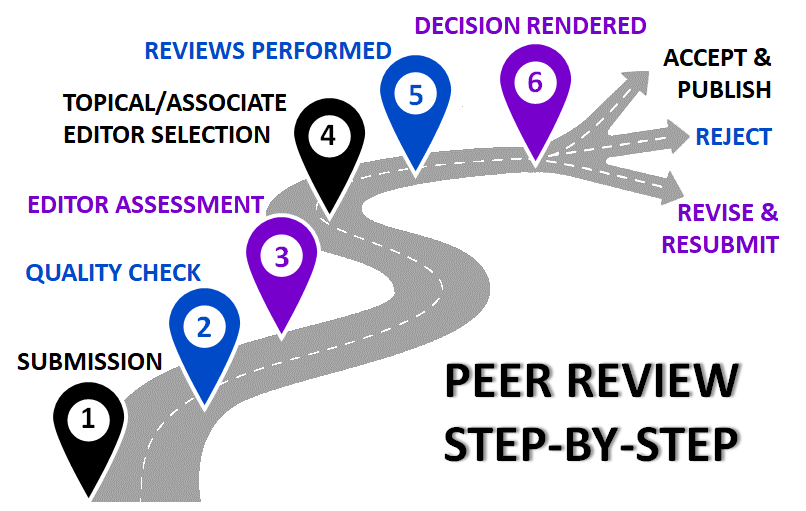
Types of Editorial Decisions
Accept: Rare for initial submissions; manuscript accepted with minor or no changes required
Minor Revisions: Generally positive review with specific, addressable concerns
- Typical timeline for revision: 2-4 weeks
- High probability of acceptance with proper response
- Focus on clarity, completeness, and specific reviewer requests
Major Revisions: Significant concerns but potential for acceptance
- Timeline for revision: 1-3 months
- May require additional data collection or analysis
- Substantial rewriting often needed
- Re-review by same or new reviewers likely
Reject and Resubmit: Fundamental issues but editorial interest remains
- Rare decision type; essentially starting over
- Major conceptual or methodological changes required
- New submission treated as fresh manuscript
- No guarantee of acceptance after revision
Reject: Manuscript not suitable for journal
- May be due to scope, quality, or significance issues
- Decision typically final for that journal
- Feedback valuable for revision for other journals
- Consider reviewer suggestions for improvement
Analyzing Reviewer Comments
Comment Categories:
Major Issues (Must Address):
- Methodological flaws or gaps
- Significant interpretation errors
- Missing critical literature
- Ethical concerns
- Fundamental clarity problems
Minor Issues (Should Address):
- Writing clarity and grammar
- Figure and table improvements
- Reference formatting
- Supplementary material organization
- Specific clarification requests
Suggestions (Consider Addressing):
- Alternative interpretations
- Additional analyses or discussions
- Future research directions
- Presentation preferences
- Theoretical extensions
Reading Between the Lines:
- “This is an interesting study, but…” = Major revisions likely needed
- “Minor concerns” with extensive comments = Expect substantial work
- Positive tone with specific requests = Good chance of acceptance
- Questions about fundamental assumptions = Potential rejection risk
Crafting Effective Responses to Reviewers
Response Letter Structure
Introduction:
- Thank reviewers and editor for their time and insights
- Acknowledge the value of their feedback
- Provide overview of changes made
- Include summary table of major changes (if extensive)
Point-by-Point Responses:
- Quote each reviewer comment exactly
- Provide detailed response to each point
- Indicate specific changes made to manuscript
- Include page/line numbers for easy verification
- Explain rationale for any changes not made
Additional Changes:
- Describe improvements made beyond reviewer requests
- Explain any new references or analyses added
- Note corrections of errors discovered during revision
- Acknowledge contributions of additional collaborators
Response Strategies for Different Comment Types
For Methodological Criticisms:
- Acknowledge validity of concerns
- Provide additional methodological detail
- Include new analyses if possible
- Explain limitations if changes aren’t feasible
- Refer to relevant literature supporting your approach
Example Response: “Reviewer 2 raises an important concern about our sample size calculation. We have now included a detailed power analysis in the Methods section (page 8, lines 156-162) showing that our sample of 150 participants provides 80% power to detect an effect size of d=0.45, which is consistent with previous research in this area (citations). We acknowledge that larger samples would increase power, and have added this as a limitation in our Discussion (page 18, lines 298-301).”
For Interpretation Disputes:
- Acknowledge alternative viewpoints
- Provide evidence supporting your interpretation
- Discuss competing explanations fairly
- Modify conclusions if warranted
- Maintain respectful, scholarly tone
For Writing and Clarity Issues:
- Thank reviewer for specific suggestions
- Indicate exact changes made
- Explain reorganization or restructuring
- Acknowledge improvement in readability
- Provide page/line references for all changes
Managing Contradictory Reviews
Common Contradiction Scenarios:
- One reviewer wants more detail, another wants brevity
- Conflicting interpretation preferences
- Different opinions on statistical approaches
- Contradictory suggestions for reorganization
- Opposing views on theoretical frameworks
Resolution Strategies:
- Identify the core concern behind each suggestion
- Find middle-ground solutions when possible
- Prioritize editor’s preferences when stated
- Explain your reasoning for choosing one approach
- Acknowledge both perspectives in your response
Sample Response to Contradictions: “We note that Reviewer 1 suggests expanding our discussion of theoretical implications while Reviewer 2 recommends focusing more on practical applications. We have tried to balance these perspectives by reorganizing the Discussion section to address theoretical contributions first (pages 15-17) followed by practical implications (pages 17-19), while keeping the overall length reasonable.”
Advanced Revision Strategies
Systematic Revision Approach
Phase 1: Big Picture Assessment (Week 1)
- Read all reviews completely without responding
- Identify major themes and patterns across reviews
- Assess feasibility of requested changes
- Develop revision strategy and timeline
- Consult with co-authors about division of labor
Phase 2: Major Revisions (Weeks 2-6)
- Address methodological concerns first
- Conduct new analyses if required
- Revise theoretical framework if needed
- Reorganize structure based on feedback
- Update literature review with new sources
Phase 3: Minor Revisions and Polish (Weeks 7-8)
- Improve clarity and writing quality
- Refine figures and tables
- Format references and citations
- Prepare supplementary materials
- Conduct final proofreading
Phase 4: Response Preparation (Week 9)
- Draft detailed response letter
- Create change summary document
- Review for completeness and accuracy
- Get co-author approval for submission
- Prepare resubmission package
Handling Impossible or Unreasonable Requests
Assessing Reasonableness:
- Is the request methodologically sound?
- Can it be completed within reasonable time/resources?
- Does it align with the study’s original scope?
- Would it improve the manuscript significantly?
- Is the reviewer demonstrating clear expertise?
Strategies for Unreasonable Requests:
- Explain why the request cannot be fulfilled
- Provide alternative approaches when possible
- Cite relevant literature supporting your position
- Acknowledge the limitation but defend your approach
- Suggest the concern as future research direction
Sample Response to Unreasonable Request: “Reviewer 3 suggests conducting a longitudinal follow-up study to strengthen our cross-sectional findings. While we agree this would be valuable, it is beyond the scope of the current study and would require an additional 2-year data collection period. We have added discussion of this limitation (page 19, lines 312-315) and suggested longitudinal research as an important future direction (page 20, lines 328-330).”
Managing Multiple Revision Rounds
Second Round Strategies:
- Focus on reviewer-specific concerns from first round
- Address any new issues raised by re-reviewers
- Maintain consistency with previous responses
- Thank reviewers for continued engagement
- Demonstrate progress from first submission
Third Round and Beyond:
- Consider whether continued revision is worthwhile
- Evaluate alternative journal options
- Assess if fundamental disagreement exists
- Maintain professional tone despite frustration
- Know when to withdraw and resubmit elsewhere
Common Pitfalls and How to Avoid Them
Pre-Submission Mistakes
Insufficient Journal Research:
- Problem: Submitting to inappropriate journals
- Solution: Read recent issues and author guidelines thoroughly
- Prevention: Create journal comparison spreadsheet
Premature Submission:
- Problem: Submitting before manuscript is ready
- Solution: Use internal review process with colleagues
- Prevention: Set aside time between completion and submission
Poor Formatting:
- Problem: Ignoring journal-specific requirements
- Solution: Create journal-specific formatting checklist
- Prevention: Format during writing, not after completion
Response Letter Errors
Defensive Tone:
- Problem: Responding emotionally to criticism
- Solution: Wait 24-48 hours before drafting responses
- Prevention: View reviews as collaborative improvement
Incomplete Responses:
- Problem: Failing to address all reviewer concerns
- Solution: Create systematic tracking system for comments
- Prevention: Use numbered or lettered response format
Inadequate Documentation:
- Problem: Not showing specific changes made
- Solution: Include page/line numbers for all changes
- Prevention: Use track changes feature during revision
Revision Process Mistakes
Scope Creep:
- Problem: Making unnecessary changes beyond reviewer requests
- Solution: Focus on addressing specific concerns raised
- Prevention: Create revision plan before beginning work
Inconsistent Changes:
- Problem: Making changes that contradict other sections
- Solution: Review entire manuscript after major revisions
- Prevention: Maintain revision log with change descriptions
Timeline Mismanagement:
- Problem: Missing revision deadlines or rushing quality
- Solution: Create realistic timeline with buffer periods
- Prevention: Begin revision planning immediately upon receiving reviews
Building Long-Term Publishing Success
Relationship Building
With Editors:
- Respond professionally to all communications
- Meet deadlines and communicate delays promptly
- Volunteer for editorial board service when appropriate
- Suggest qualified reviewers and serve as reviewer yourself
- Acknowledge editorial contributions in acceptance responses
With Reviewers:
- Thank reviewers publicly when possible
- Cite reviewer suggestions in published work
- Maintain professional relationships at conferences
- Consider collaboration opportunities that arise
- Pay forward good reviewing practices in your own reviews
Developing Review Skills
Benefits of Reviewing:
- Learn journal standards and expectations
- Develop critical evaluation skills
- Build relationships with editors
- Stay current with field developments
- Contribute to scholarly community
Quality Reviewing Practices:
- Provide constructive, specific feedback
- Balance criticism with suggestions for improvement
- Complete reviews promptly and thoroughly
- Maintain confidentiality and professionalism
- Decline invitations when conflicts exist
Career Integration
Publication Portfolio Strategy:
- Balance high-impact submissions with reliable outlets
- Develop expertise in specific journal niches
- Build on previous publications strategically
- Consider special issues and themed submissions
- Maintain steady publication rhythm
Professional Development:
- Attend workshops on academic writing and publishing
- Join professional organizations with publishing focus
- Seek mentorship from successful publishers
- Participate in peer review training programs
- Develop expertise in research communication
Emerging Trends and Future Considerations
Open Science Movement
Preprint Servers:
- Benefits: Rapid dissemination, priority establishment, feedback collection
- Considerations: Quality control, journal policies, career implications
- Strategy: Use strategically for timely research, maintain quality standards
Open Peer Review:
- Transparency in review process
- Public accountability for reviewers
- Potential for more constructive feedback
- Consider journals experimenting with open review models
Data Sharing Requirements:
- Increasing journal mandates for data availability
- FAIR principles (Findable, Accessible, Interoperable, Reusable)
- Plan data management from study inception
- Consider repositories and sharing platforms
Technology Integration
AI and Manuscript Preparation:
- Grammar and style checking tools
- Reference management automation
- Figure and table generation assistance
- Ethical considerations and disclosure requirements
Digital Review Platforms:
- Enhanced reviewer interfaces
- Multimedia review capabilities
- Real-time collaboration tools
- Mobile-friendly submission systems
Evolving Metrics and Assessment
Beyond Impact Factor:
- Article-level metrics (ALMs)
- Social media and policy impact
- Open access citation advantages
- Field-specific evaluation criteria
Career Implications:
- Institutional policy changes
- Funding agency requirements
- Promotion and tenure considerations
- International collaboration impacts
Conclusion
Successfully navigating the peer review process requires strategic thinking, professional communication, and resilience in the face of criticism. The process, while sometimes challenging, represents one of the most valuable aspects of academic scholarship—the opportunity for your work to be strengthened through expert evaluation and collaborative improvement.
The strategies outlined in this guide will help you approach peer review with confidence, turning potential obstacles into opportunities for growth and publication success. Remember that rejection is not a reflection of your worth as a researcher, but rather information about fit between your work and a particular outlet. Each review, whether leading to acceptance or rejection, provides valuable insights that can strengthen your research and writing.
As the publishing landscape continues to evolve with new technologies, open science initiatives, and changing career expectations, the fundamental principles of quality research, clear communication, and professional engagement will remain central to publication success. By mastering these elements and staying adaptable to emerging trends, you’ll be well-positioned to navigate the peer review process effectively throughout your academic career.
The peer review process is ultimately about advancing knowledge through collective effort. When you approach it with professionalism, openness to feedback, and commitment to excellence, you contribute not only to your own success but to the broader mission of scholarly communication and scientific progress.